
James Webb Is Redefining the Boundary Between Planets and Stars
When people talk about space, the categories often seem simple: a star is a star, a planet is a planet, and everything in between belongs to some exotic exception. But astronomy has known for a long time that reality is not so tidy. Between gas giants and the smallest stars, there is a gray zone of objects that cannot be classified easily by size or mass alone.
That is exactly why the latest observations from the James Webb Space Telescope are so interesting. At the center of the story is 29 Cygni b, a massive gaseous world with about 15 times the mass of Jupiter, orbiting its star at a huge distance. What makes it especially important is not just its size, but the possibility that it formed as a planet, even though its mass places it very close to the range often associated with brown dwarfs.

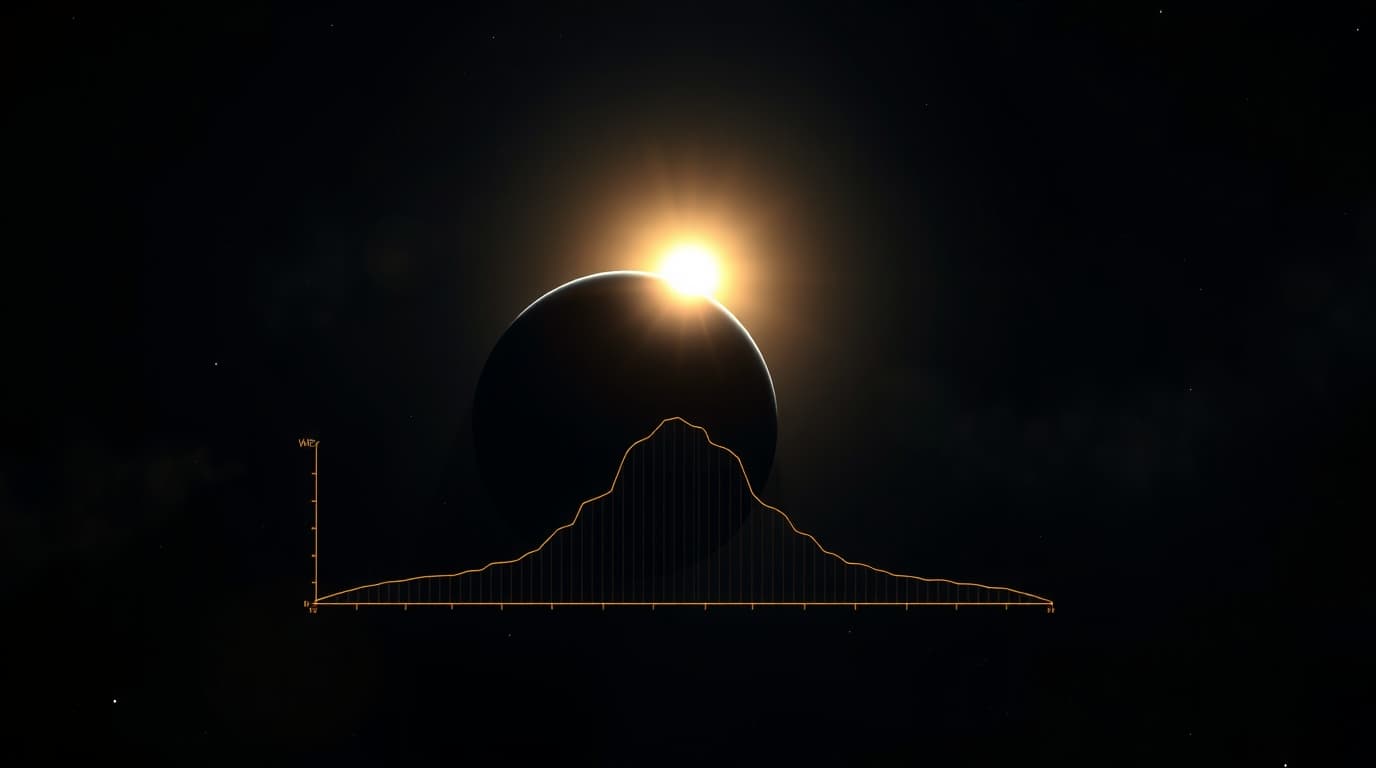
Visual illustration: InfoHelm
Why the boundary between planets and stars is so unclear
In popular explanations, people often hear that objects above roughly 13 Jupiter masses move into the category of brown dwarfs. That rule exists because around that mass, deuterium fusion can become possible, so it has long served as a useful rough dividing line. Even so, astronomers have known for years that mass alone does not tell the full story.
That is why more attention is now shifting from the question of how massive an object is to the question of how it formed. Planets generally form gradually, through the accretion of material in a disk around a young star. Stars, and by extension brown dwarfs in the classical sense, form through the collapse and fragmentation of gas clouds. When an object sits right on the borderline in terms of mass, the formation process may matter more than the number of Jupiter masses.
What Webb actually found in 29 Cygni b
Webb made it possible to study the atmosphere and composition of this object in greater detail. Researchers looked for signs of heavier chemical elements and analyzed how enriched the atmosphere is with material usually associated with planetary formation inside a protoplanetary disk.
The result was especially intriguing: 29 Cygni b shows signs of enrichment in heavier elements, suggesting that it grew by collecting solid, metal-rich material. That looks much more like the process that forms a planet than the way stars or brown dwarfs are classically thought to form.
On top of that, the object’s orbit also supports this idea. If its motion is aligned with the rotation of the larger system, that is another sign that it likely formed inside the disk around its star rather than as an independent object born from gas collapse.
Why this matters beyond a single exoplanet
The most interesting part of the story is not just the fate of one distant world, but the way a result like this changes how we classify objects in space. If a body with around 15 Jupiter masses can form as a planet, then the traditional mass-based division becomes less reliable than it appears in simple textbook diagrams.
That matters for future discoveries as well. In the coming years, Webb and other observatories will likely find more objects near this boundary. If the same pattern appears again — high mass, but chemical and orbital signatures that point to planetary formation — astronomers will have to take even more seriously the idea that the boundary between planets and brown dwarfs is not a sharp line, but a broad transitional zone.
Webb is not only changing our images of space, but also our definitions
James Webb is already famous for spectacular images, but its real strength lies in helping answer questions that were, until recently, mostly theoretical. In this case, it did not just “photograph” a distant object. It helped researchers better understand its chemical makeup, probable origin, and place within the larger story of how worlds form.
That is a major step forward, because astronomy often advances the most when new measurements force scientists to rethink old categories. Instead of making the universe simpler, new observations reveal just how much more complex and fascinating it really is.
Conclusion
The story of 29 Cygni b is so compelling because it challenges the overly simple idea that cosmic objects can always be sorted by a single number. Even though it sits very close to the range often associated with brown dwarfs, the available data suggest that it likely formed as a planet — through accretion in a disk, not gas collapse.
That does not mean astronomers have solved every question about the boundary between planets and stars. But it does mean they now have a much stronger reason to look at that boundary through the lens of origin, not just mass. And that is exactly the kind of shift that makes modern astronomy so exciting.
Note: This article is educational and informational.