The return of humans to the Moon: why Artemis II is much more than another space mission
After more than half a century, humans are preparing to head toward the Moon once again. That fact alone is enough to make Artemis II feel historic. But its importance is not only about symbolism or nostalgia for the Apollo era.
This time, the return to the Moon is happening in a very different world. Today’s space missions are not only scientific achievements and technical demonstrations. They are also part of a much larger story about technology, industry, geopolitical influence, and long-term human presence beyond low Earth orbit.
That is why Artemis II matters as more than the first crewed mission toward the Moon in so many decades. It represents the beginning of a new phase in which the Moon is once again becoming a strategic destination, not just a symbol of a past era.
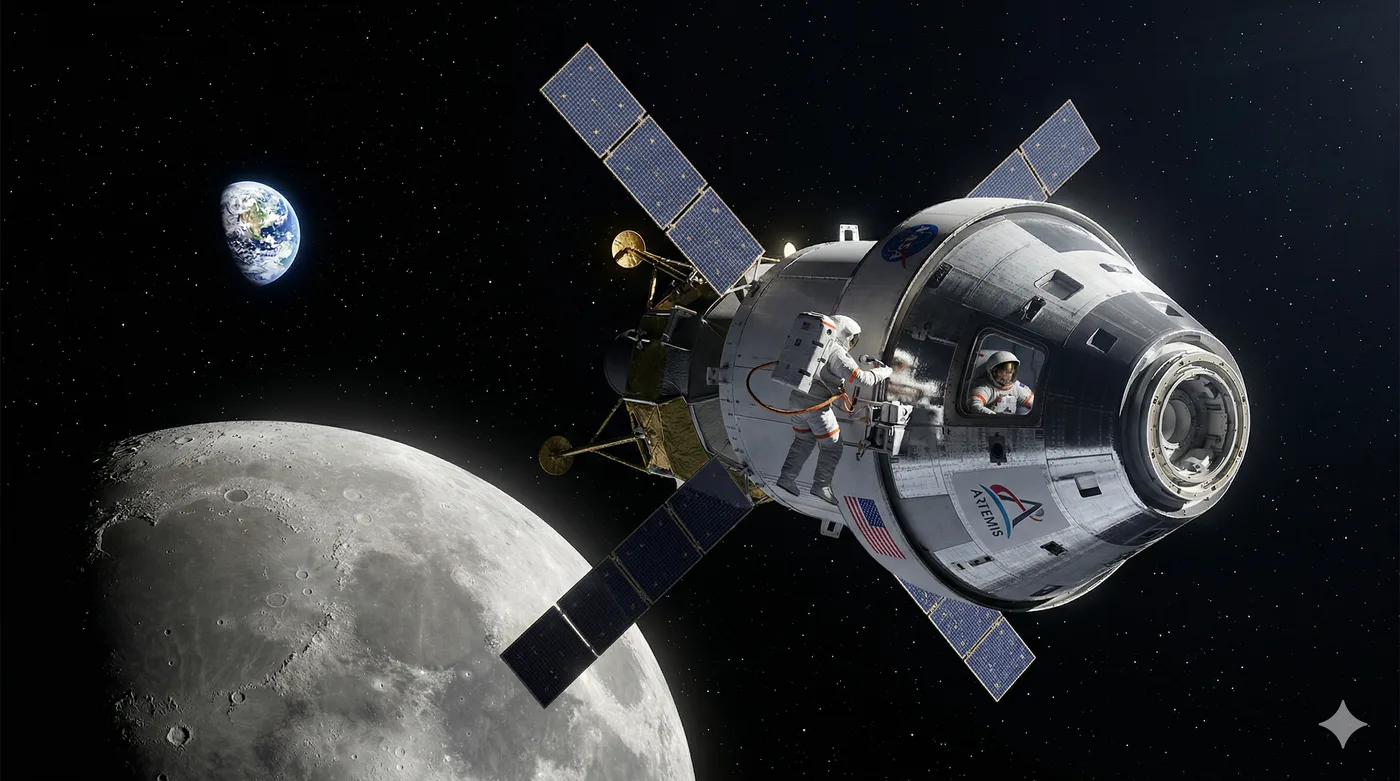
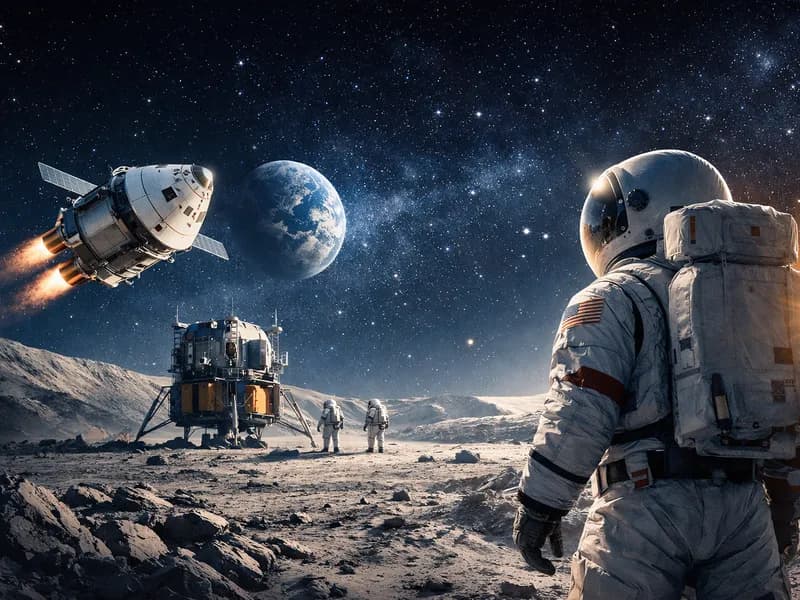
Visual illustration: InfoHelm
Why Artemis II is a turning point
Artemis II is not a landing mission, but that does not reduce its importance. In fact, that is exactly why it matters so much. This mission is a test of the entire next phase of the American lunar program: the spacecraft, the crew, the life-support systems, communications, and operational procedures for deep space.
Unlike low Earth orbit, where humanity already has long experience through the International Space Station, the region around the Moon represents a very different level of complexity. The distance is much greater, the return is harder, and every system has to be more reliable.
That is why Artemis II is more than a symbolic loop around the Moon. It is a test of whether the modern return to deep space can truly work with a human crew. If this phase succeeds, the next steps toward landing and long-term presence will stand on much stronger ground.
The Moon is no longer just a destination, but a platform
In the Apollo era, the objective was clear: reach the Moon, win the space race, and demonstrate technological superiority. Today, the logic is different. The Moon is increasingly being viewed as a platform for longer-term presence, infrastructure development, technology testing, and preparation for even more distant missions, including Mars.
That changes the meaning of the lunar program entirely. Returning to the Moon is no longer just about a flag and a historic moment, but about who will establish a sustainable system for work, research, and logistics beyond Earth first.
In that framework, Artemis II becomes the first serious step toward a much larger goal. It is not the end of the story, but the beginning of a new architecture of human presence in space.
The new race to the Moon is no longer only an American story
Another reason this mission matters is that it is taking place at a moment when the Moon is once again becoming a field of global competition. This is no longer a story about one dominant power and one isolated achievement. More and more, the conversation is about who will have the technological, industrial, and strategic advantage in the next lunar era.
China is a key factor in that picture. As its plans become more ambitious, the American lunar program takes on greater urgency. The return to the Moon now also carries a dimension of international prestige, as well as long-term influence over emerging technologies, resources, and space infrastructure.
That means Artemis II should also be seen as part of a bigger picture. It is not only a NASA mission. It is a signal that the next space era will be measured not just by individual launches, but by long-term positioning.
Why this phase matters more than the spectacle
Major space missions naturally attract attention because of rockets, astronauts, and historic imagery. But the true value of Artemis II is not in the spectacle. It is in showing that human missions beyond Earth can once again become an operational reality, rather than a rare exception that happens once in several decades.
That may be the most important change in the tone of the whole story. If Apollo was the peak of a specific political moment, Artemis is trying to become the start of continuity. In other words, the goal is not simply to send people back toward the Moon, but to open a path where this is no longer unusual.
That is exactly why missions like this are so important. They do not exist only to impress the public, but to build trust in a system that could one day support more regular and more complex missions in deep space.
Technology, industry, and the new space economy
The return of humans toward the Moon also has a very practical side. Behind a mission like this there are not only astronauts and flight controllers, but a whole industrial network: rocket systems, capsules, communications, materials, robotics, energy infrastructure, and private partners.
That is why the lunar program is increasingly connected with the new space economy. Whoever develops better technologies for transport, surface operations, system maintenance, and long-term presence could gain an advantage that will later matter far beyond the Moon itself.
In that sense, Artemis II is also a sign of how the space program is changing. It is no longer separate from industry and the economy. It is becoming an increasingly important extension of both.
What this mission means for the ordinary observer
For people who do not closely follow space policy and technical details, the simplest answer is this: Artemis II marks the moment when humans are truly returning to serious deep space again.
That matters because it shows that the Moon is no longer just a beautiful memory from the twentieth century. It is becoming part of concrete plans for the future again. And when a destination makes the transition from historic symbol to real project, it usually means that something fundamental is changing.
Maybe that is exactly why this mission feels so compelling. It combines the old dream of exploration with the new reality of technological competition. That is the kind of story that rarely leaves even casual observers indifferent.
Conclusion
Artemis II is a return of humans toward the Moon, but at the same time it is much more than that. This mission is a test of a new space era in which the Moon is no longer just the target of one legendary expedition, but a possible foundation for longer-term human presence beyond Earth.
If it succeeds, Artemis II will not be remembered only as a historic return, but as the beginning of a new phase in which science, technology, industry, and geopolitics meet again above the lunar horizon.
And that may be the most exciting part of the whole story: we are not returning only because we were there once before, but because the Moon is becoming important again for what comes next.
Note: This article is educational and informational.