Super Mario – The Plumber Who Shaped Our Childhood
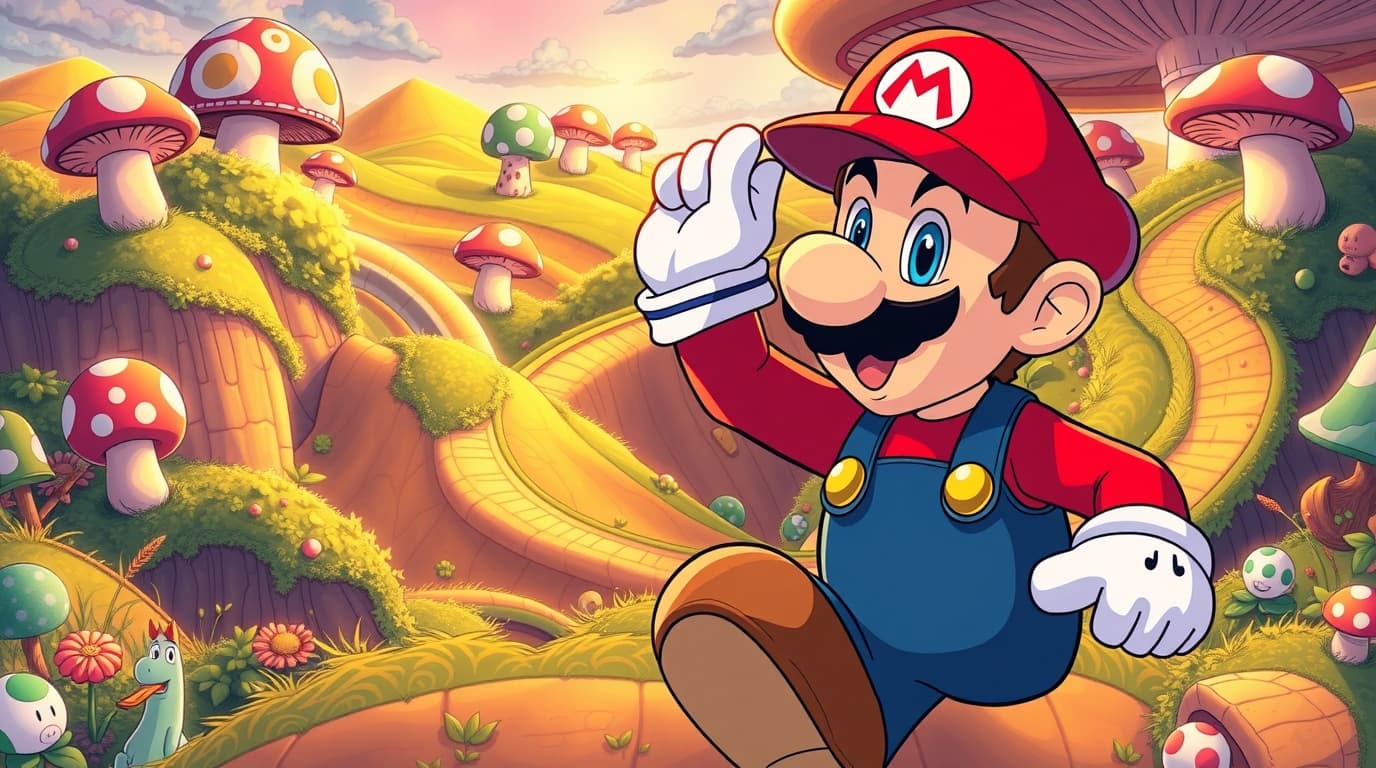
If you grew up with NES cartridges, arcade halls or those “999-in-1” family consoles, there’s a big chance your first gaming love was – Super Mario.
The guy in the red cap and blue overalls became a symbol of an entire childhood and probably the most recognizable character in video game history.
Today, more than 40 years later, Mario is still running, jumping on Goombas and collecting stars – only now in much prettier resolution.
How It All Started: From Jumpman to Super Mario
Mario first appeared in 1981 in the arcade game Donkey Kong, and back then he wasn’t even called Mario – but Jumpman.
He was a carpenter jumping over barrels to save a girl from a giant ape. Only later did he get the name Mario, reportedly after the landlord of Nintendo’s US office, Mario Segale.
The real explosion came in 1985 with Super Mario Bros. for the Nintendo Entertainment System (NES). The combination of:
- precise, responsive jumping,
- secret passages and hidden bricks,
- and music that gets permanently stuck in your head,
not only turned the game into a hit, but helped revive the entire video game industry after the early eighties crash.
From that point, Mario became Nintendo’s mascot and the foundation of dozens of games: Super Mario Bros. 3, Super Mario World, Super Mario 64, Galaxy, Odyssey, Wonder… each new entry adding fresh ideas, but keeping the same simple magic – the jump, the rhythm and that feeling of being in full control.
Is Mario Still Popular?
Short answer: more than ever.
- Mario has appeared in over 250 games, from platformers to racers (Mario Kart), party games and sports titles.
- The core Super Mario series has sold over 430 million copies, while the wider Mario universe (Kart, Party, spin-offs) reaches hundreds of millions of games sold, making it one of the most successful gaming franchises of all time.
- As a franchise, Mario has generated tens of billions of dollars in revenue through games, movies, merch and other products.
On top of that, 2023 brought us The Super Mario Bros. Movie, and theme parks like Super Nintendo World further cement Mario’s status as a global icon, far beyond console screens.
In other words: Mario isn’t going anywhere – he’s just jumping to higher and higher levels.
“Super Mario Is Dead” – Where Did That Come From?
A few years ago you could see a meme all over the internet claiming: “Mario dies on March 31st.”
It sounded like the worst kind of clickbait nightmare for any gamer, but the truth was much more harmless.
What actually happened?
- In 2020/2021 Nintendo released the collection Super Mario 3D All-Stars for Switch (Super Mario 64, Sunshine, Galaxy) and Game & Watch: Super Mario Bros. as part of the 35th anniversary celebration.
- From day one they announced these products would be limited-time – sales would end on March 31st, 2021.
- The internet reacted in typical fashion: memes like “Mario dies on March 31st”, “RIP Mario” and similar jokes spread across social media as if Nintendo was literally killing off the character.
Of course, Mario did not “die” – they simply stopped selling a few limited editions. The franchise continued as normal with new releases and content.
For gamers who grew up with him, the whole story was a chance to get a bit nostalgic, have a laugh… and maybe quickly grab another copy “for the collection”.
Luigi – The Underdog Brother Who Won His Own Fans
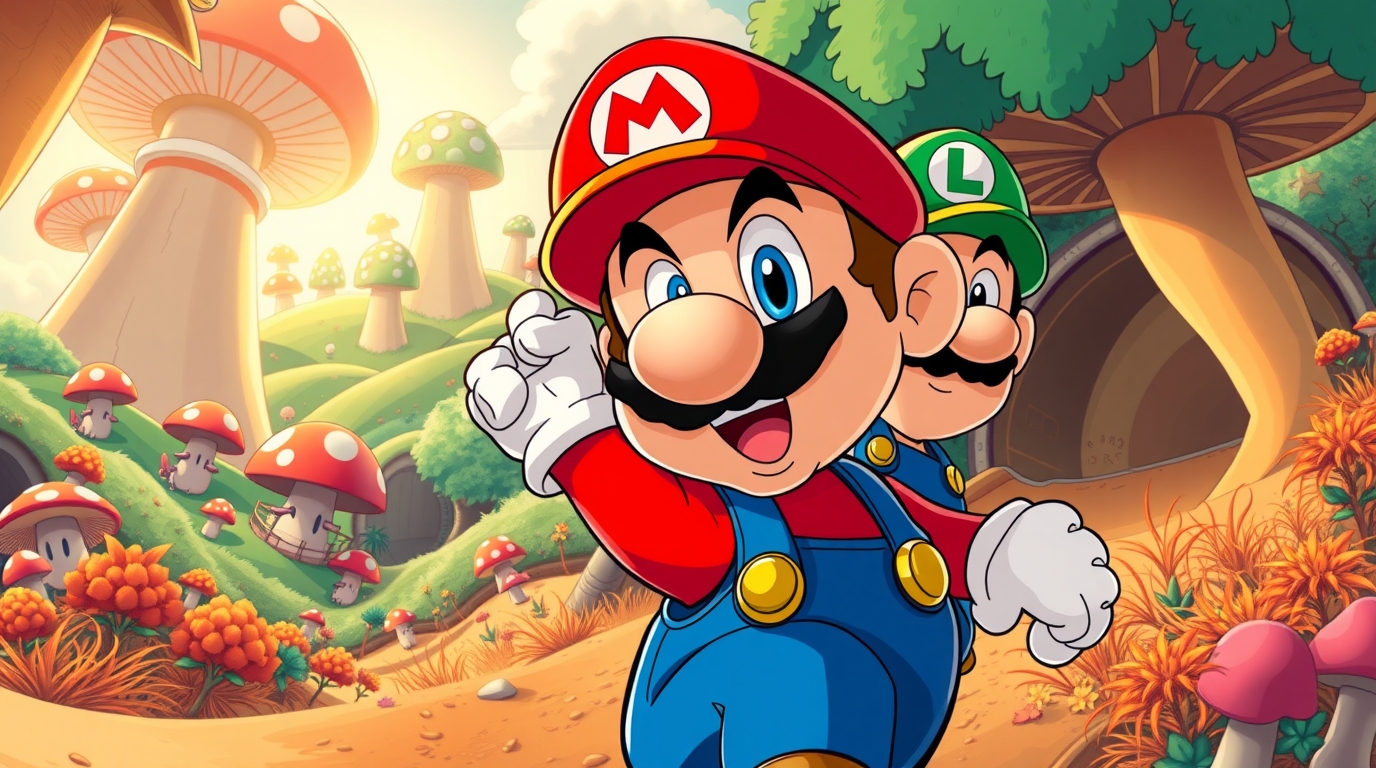
Mario’s younger, but taller brother Luigi appeared in 1983 in Mario Bros., primarily as the second playable character in multiplayer – literally a green palette swap of Mario.
Over time, Luigi gained:
- his own personality – a bit timid, clumsy, but incredibly brave when it really matters,
- his own game series, Luigi’s Mansion, where he hunts ghosts with a vacuum cleaner,
- the role of a fan favorite for players who love “underdog” heroes.
In 2013 Nintendo even declared “The Year of Luigi” for his 30th birthday, highlighting how important he is for the community.
For many of us, the moment the second controller got Luigi was the first true co-op experience in life: one sibling, one console, two characters, one goal – reach the end of the level with as few lost lives as possible.
Fun Facts and Little Legends About Super Mario
Here are a few nuggets you can use in nostalgic debates with your friends:
- Mario exists because Nintendo didn’t get the Popeye license. Shigeru Miyamoto originally wanted a game with Popeye characters, but when the license fell through, he created Jumpman/Mario, Pauline and Donkey Kong as replacements.
- The mustache, cap and overalls exist because of hardware limits. With so few pixels it was easier to draw a mustache than a mouth, and the cap plus overalls helped show movement and shape of the character more clearly.
- Mario has had more jobs than an average freelancer. Across different games he’s been a carpenter, plumber, kart driver, athlete (tennis, golf, football), doctor (Dr. Mario), and even an Olympian.
- One jump – 40 years of game design. That iconic “perfectly timed jump” had such an impact on the genre that many platformer developers cite Super Mario Bros. as the standard for how a 2D jump should feel.
- The best-selling classic: Super Mario Bros. from 1985 sold over 40 million copies and still ranks among the best-selling games of all time.
What Does Super Mario Mean to a Modern Gamer?
For the generation that grew up with him, Mario is much more than “just a character in a game” – he is:
- our first gaming tutorial: he taught us that left–right movement, A for jump and B for run is the universal language of platformers;
- a bridge between retro and modern times: many players today introduce their kids to gaming through a Mario title;
- an example of how to keep an IP alive for decades – through smart innovation without losing its soul.
While the industry chases photorealistic graphics and giga-budgets, Mario still wins people over with a simple formula: “good physics, good level design, and that feeling that every extra heart, mushroom or star is a tiny reward.”
Conclusion
Super Mario is not just “a character from a game” – he is a cultural phenomenon that has outlived several console generations, trend shifts and countless competitors. From Jumpman in Donkey Kong, through the 8-bit hero on NES, to 3D adventures and the Switch era, Mario has always stayed true to one thing: pure, genuine fun.
The “Super Mario is dead” meme was just a joke about the end of sales for limited editions. In reality, Mario is more alive than ever – and will almost certainly still be around when a new generation of kids discovers their very first game 20 years from now.
Disclaimer: This article is for informational and nostalgic purposes only. Mentioning specific games and brands does not constitute a paid promotion or financial advice to purchase any product.