God of War – from Greek vengeance to Norse Ragnarök
Very few series are as closely tied to the PlayStation brand as God of War. Since 2005 and its debut on PlayStation 2, the story of the Spartan warrior Kratos has grown into a decades-long saga that blends brutal action, mythology and surprisingly emotional storytelling.
The first games were pure Greek tragedy in the form of a hack-and-slash spectacle – blood, gods and QTE finishers that defined an entire era of console gaming. With the shift to a new Norse phase in 2018, God of War evolved into a cinematic, character-driven action RPG where the relationship between father and son matters just as much as slaying gods.
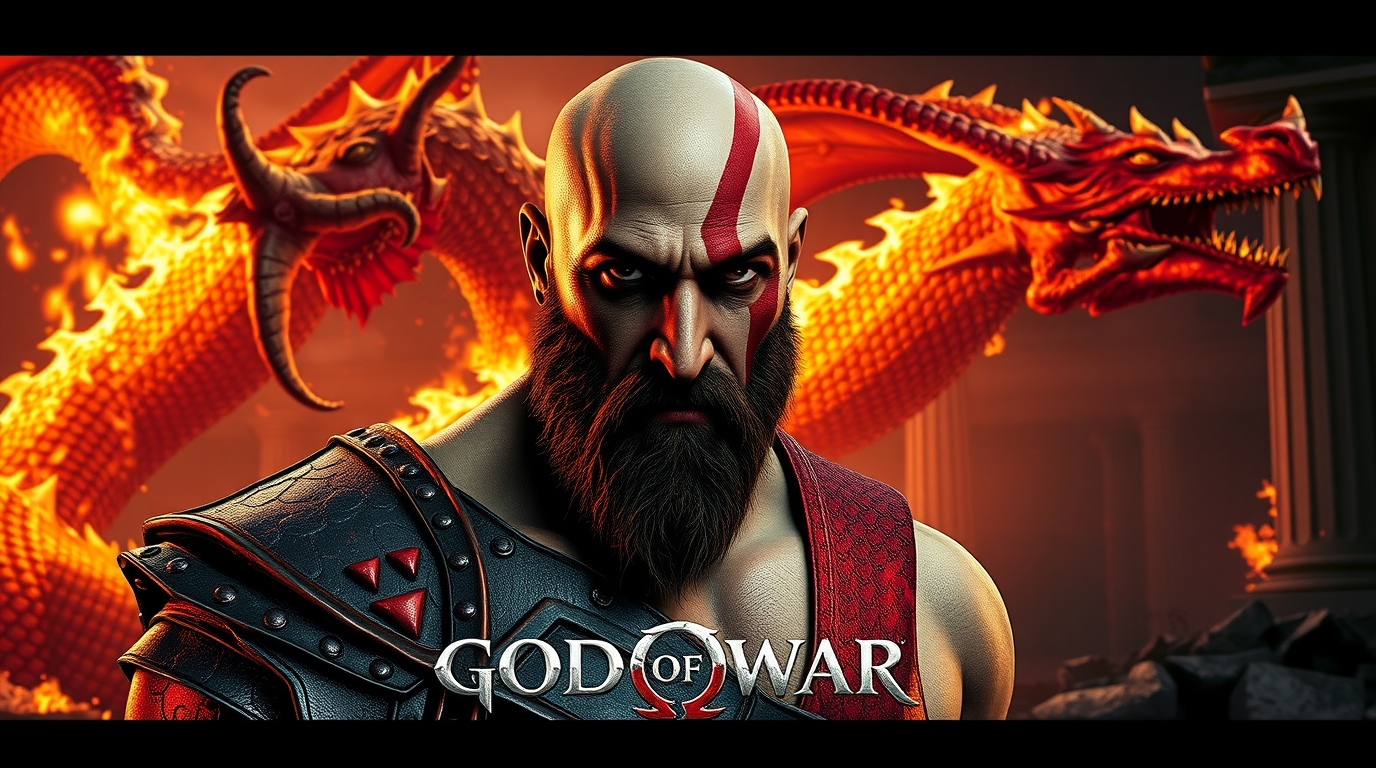
In this article we run through a short history of the series, the main entries and a focus on the latest game – God of War Ragnarök and its DLC Valhalla.
How it all started: the Greek era on PlayStation 2 and 3
The first God of War (2005) launched on PlayStation 2 as an explosive mix of:
- cinematic third-person action,
- a blend of light/heavy attacks, throws and spectacular finishers,
- a story inspired by Greek mythology but told with Hollywood blockbuster energy.
The sequel, God of War II (2007), pushed everything further – bigger boss fights, more ambitious set-pieces and an even more addictive loop of combat and upgrades. Together, the two games defined Kratos as an antihero consumed by revenge, willing to kill half of Olympus to confront his inner demons.
The “Greek” phase also includes:
- God of War: Chains of Olympus (PSP) – a prequel showing earlier episodes from Kratos’ life;
- God of War III (PS3) – the grand showdown with Zeus and the Olympian gods;
- God of War: Ghost of Sparta (PSP) – a deeper look at his relationship with his brother Deimos;
- God of War: Ascension (PS3) – another prequel focused on Kratos’ break with Ares.
This period of the series is characterized by:
- a fixed, cinematic camera,
- a strong focus on combos and spectacle,
- linear but extremely dynamic levels.
For many players this era is still synonymous with the “classic, crazy” God of War.
So how many God of War games are there?
If we look at the main console titles and the most important spin-offs, the list roughly looks like this:
Greek era
- God of War (2005, PS2)
- God of War II (2007, PS2)
- God of War: Chains of Olympus (2008, PSP)
- God of War III (2010, PS3)
- God of War: Ghost of Sparta (2010, PSP)
- God of War: Ascension (2013, PS3)
- God of War: Betrayal (2007, 2D mobile game – a curiosity for collectors)
Norse era
- God of War (2018, PS4, later PC) – a “soft reboot” in the world of Norse mythology
- God of War Ragnarök (2022, PS4/PS5, later PC) – continuation and culmination of the Norse story
- God of War Ragnarök: Valhalla (2023, free DLC) – a story/roguelike epilogue
Depending on how you count mobile and experimental titles, you can say the series has around nine main games, plus side projects, comics and hints of future sequels.
A new beginning: God of War (2018)
With the jump to PlayStation 4, Santa Monica Studio essentially reinvented God of War.
Instead of a relentless god-killer screaming at Olympus, we meet an older, weary Kratos who has retreated to the North, into the world of Norse mythology. He lives there with his son Atreus, and the story begins with their journey to scatter the ashes of Kratos’ deceased wife / Atreus’ mother from the highest peak.
Key changes compared to the old games:
- the camera moves to an over-the-shoulder view, making combat more intimate and tactical;
- the narrative is told as one continuous shot, with no classic loading screens or hard cuts;
- a light RPG layer is added – gear upgrades, runic specials, armor and stats;
- the father–son relationship is the heart of the story, with far more psychologically layered characters.
The game became a huge critical and commercial success, won numerous awards and later came to PC, bringing the series to a whole new audience.
Ragnarök and Valhalla: the climax of the Norse saga
God of War Ragnarök (2022) picks up several years later, during Fimbulwinter – the great winter that heralds the end of the world. Kratos and Atreus are more experienced, but still torn between the fate that’s been foretold and their desire to break the cycle of revenge.
What Ragnarök adds compared to 2018:
- you can visit all nine realms of Norse mythology, with greater environmental variety;
- Atreus is developed as a playable character with his own moveset and motives;
- bigger, more impressive boss fights, but also intimate emotional scenes that carry the story;
- an even richer mix of combat, puzzles and exploration.
As icing on the cake, 2023 brought the free Valhalla DLC, designed as:
- a fusion of roguelike challenge (die, grow stronger, try again),
- and an introspective epilogue where Kratos literally walks through his own past.
For many fans, Valhalla is the final chapter of the Norse saga – and a graceful bridge toward the series’ next phase.
Kratos: from “Ghost of Sparta” to a father trying not to repeat his mistakes
One big reason God of War has stayed relevant for two decades is the evolution of Kratos himself.
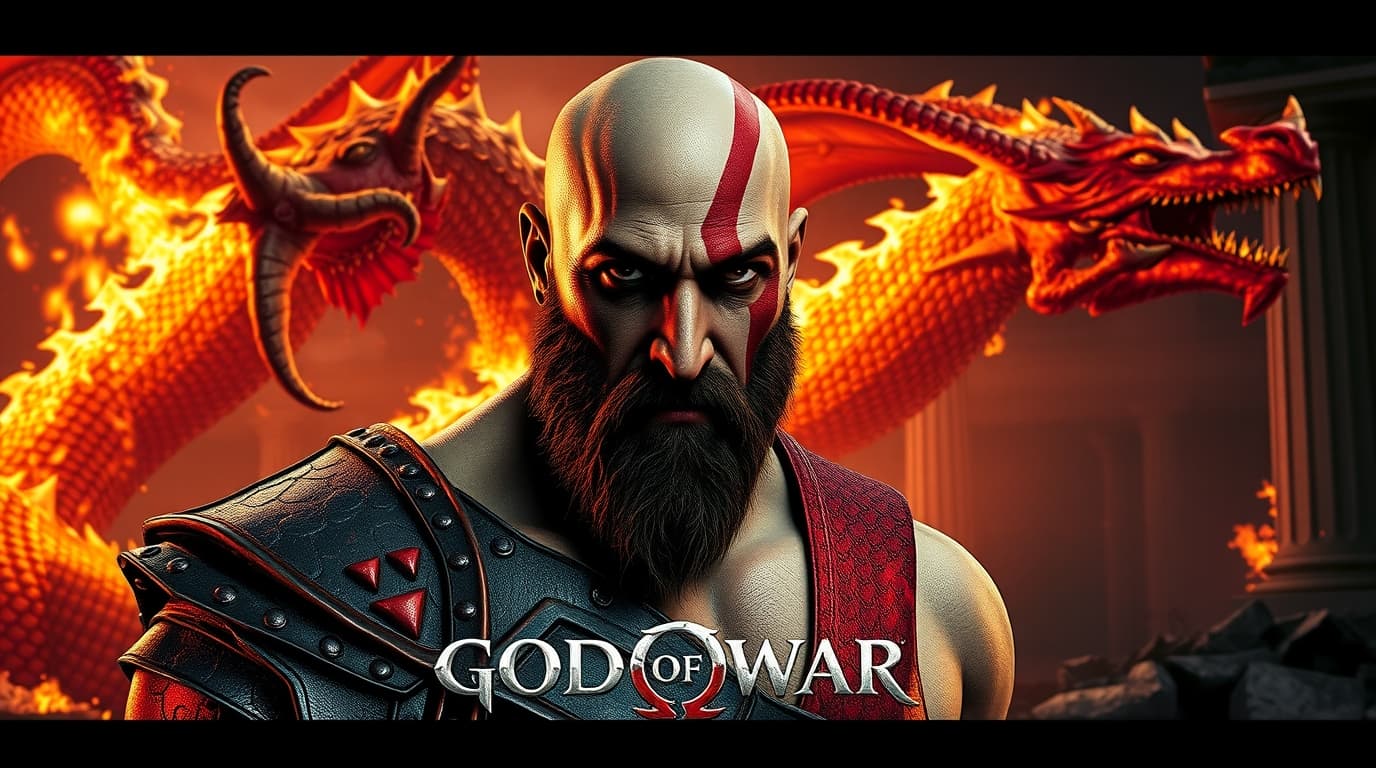
- In the Greek era he’s the embodiment of rage, a warrior cursed to carry the ashes of his family on his skin – hence his pale complexion and the nickname “Ghost of Sparta.”
- The red tattoo over his eye and body is a tribute to his brother Deimos, adding another tragic layer to his story.
- In the Norse era we see a Kratos who’s trying to be a different father than the gods were to him – strict, but willing to learn to listen, admit his mistakes and break the chain of inherited trauma.
This transformation arc – from pure destruction to someone fighting for a chance at redemption – is arguably the greatest strength of modern God of War.
Fun facts for fans and new players
To wrap up, a few details worth knowing:
- One long shot: both God of War (2018) and Ragnarök use a “one-shot” approach – the entire game feels like one continuous cinematic take. It’s extremely demanding in production, but it’s a big part of why you feel glued to Kratos’ perspective the whole time.
- PC renaissance: the arrival of the 2018 game, and later Ragnarök, on PC opened the series to players who never owned a PlayStation – with high frame rates, ultra-wide support and modern upscaling tech.
- Future mythologies: after Greece and the Norse world, fans have been speculating for years where Kratos could go next – Egypt, Celtic legends, maybe even Slavic mythology. There’s no official confirmation yet, but various interviews and tiny “tease” moments suggest the next chapter is already in the works.
Conclusion
From a bloody action game on PlayStation 2 to an emotionally complex saga on modern consoles and PC, God of War has taken a path very few franchises manage to walk. The Greek era delivered unmatched spectacle and brutal gameplay; the Norse era added heart, nuanced characters and a cinematic touch.
For new players, the best entry point is still God of War (2018), followed by Ragnarök + Valhalla as the grand finale of the Norse cycle. For those curious about the origins, going back to the classic games is like a time machine to the wild days of old-school PlayStation – loud, over the top and gloriously unapologetic.
One thing is certain: wherever Kratos decides to carry his axes next, the gods of that pantheon probably won’t have a good time.