
Webb spots a ‘sooty’ lemon-shaped world around a pulsar — and its atmosphere makes no sense (yet)
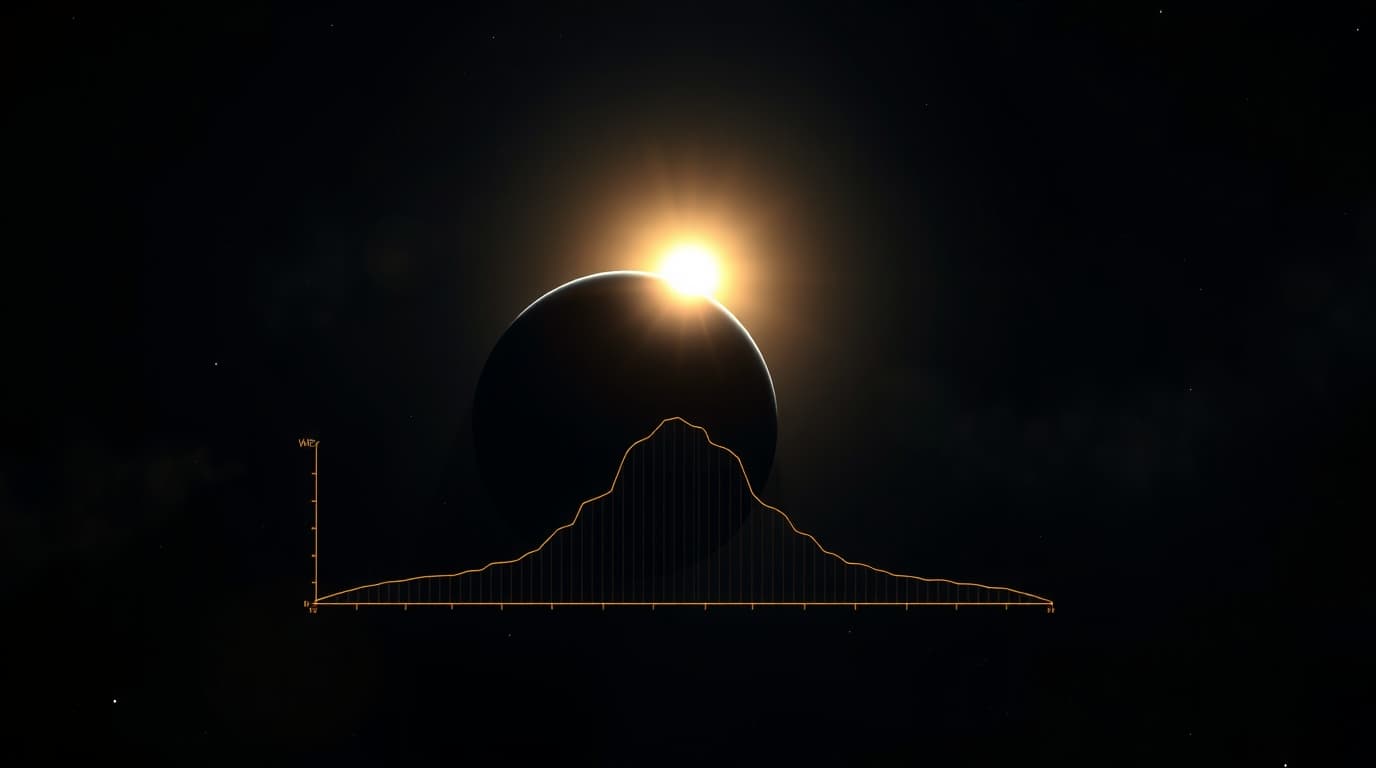
When people say “exoplanet,” most of us picture a rocky world circling a calm, Sun-like star. But this week’s JWST story is the opposite: a Jupiter-mass object orbiting a pulsar — a dense stellar remnant that spins like a cosmic lighthouse.
And the real twist isn’t just the setting. It’s the chemistry: Webb data points to an atmosphere dominated by helium and carbon, with soot-like clouds and signatures of molecular carbon rarely (if ever) seen in planetary atmospheres.

A planet that orbits a pulsar — in a system that behaves like a “black widow”
The object is officially named PSR J2322-2650b. Its host is a millisecond pulsar — roughly Sun-mass, but city-sized, emitting radiation in tight, rapid pulses.
These pulsar systems can resemble so-called “black widow” setups, where the pulsar’s wind and radiation gradually strip material from a smaller companion. What makes this case unusual is that the “companion” appears to be planet-mass, not a small star.
A carbon-heavy atmosphere: soot clouds, rare molecules, and even “diamond rain” ideas
Webb didn’t see the typical molecular lineup we’re used to hearing about (water, methane, CO₂). Instead, scientists report seeing molecular carbon, specifically C₂ and C₃ — a surprise for atmospheres at these temperatures.
That detail matters because carbon usually binds with other elements if they’re around. If molecular carbon is dominant, it suggests the atmosphere contains very little oxygen or nitrogen.
The temperature extremes are wild too: estimates range from about 1,200°F on the coldest night-side regions to roughly 3,700°F on the hottest day-side regions. In such conditions, the team suggests soot-like carbon clouds could form, and deeper down, carbon under high pressure may condense into diamonds (yes, literally) — though the big question remains: how did this object form and end up here?
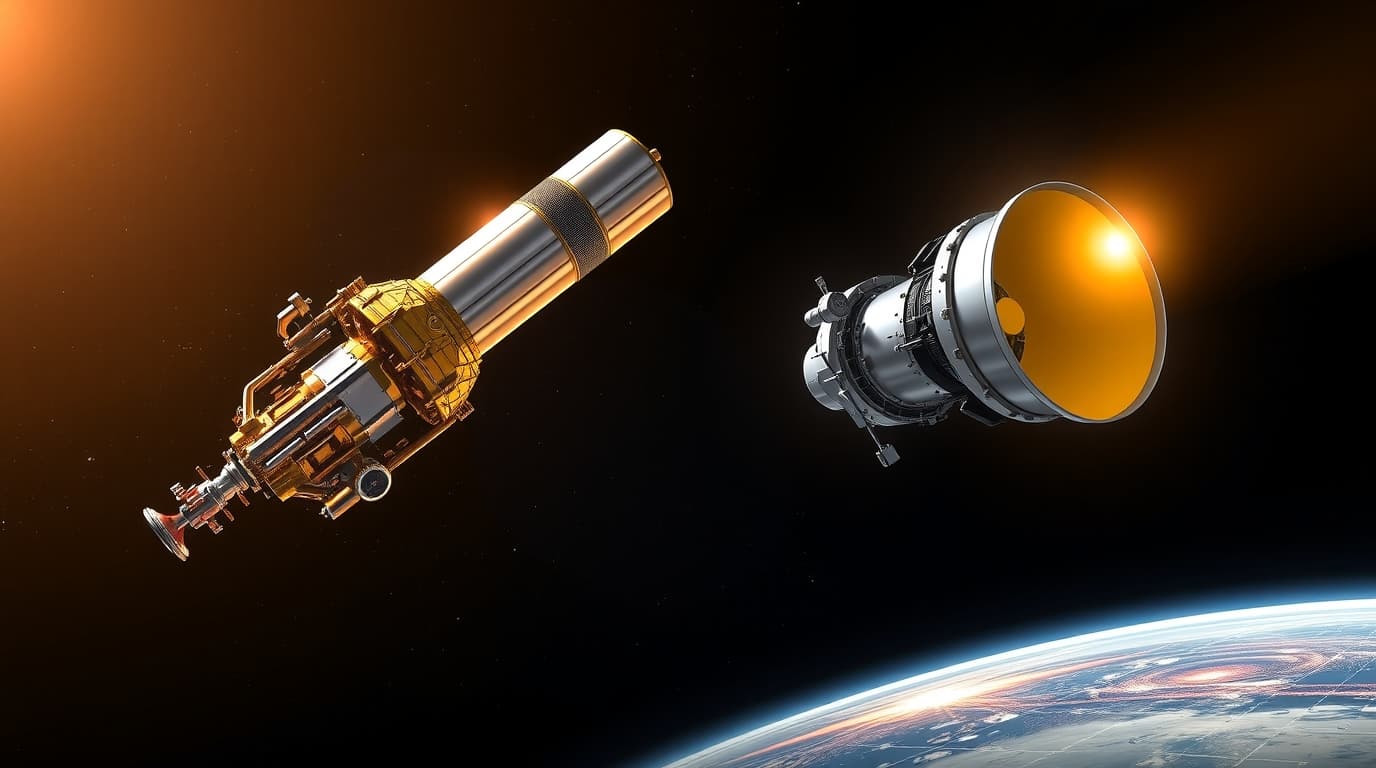
Why Webb could pull this off: the pulsar “lights” the planet, but doesn’t blind the telescope
Here’s the clever part: this pulsar is expected to emit mostly gamma rays and other high-energy particles, which Webb’s infrared instruments don’t see.
That means the team can study the planet across its orbit and get a cleaner spectrum than usual — essentially “seeing the planet illuminated” without being overwhelmed by the host star’s glare.
And this orbit is extreme:
- Distance from the pulsar: about 1 million miles
- “Year” length: just 7.8 hours
- Tidal forces stretch the object into a bizarre lemon-like shape
Why this discovery matters
This isn’t just a weird trivia planet. It’s a stress test for our models:
- Planet formation theory: How do you end up with a Jupiter-mass companion around a pulsar, and with a chemistry that looks so stripped-down?
- Atmosphere categories: If carbon-dominated, soot-cloud atmospheres exist in nature, it expands the “menu” of what we should expect Webb (and future telescopes) to find.
Conclusion
PSR J2322-2650b is a reminder that the universe doesn’t care about our neat classifications. Webb has handed astronomers a real puzzle: a planet-mass object in a brutal environment, with an atmosphere that looks unlike anything else in the catalog.
If you want, next we can do a short follow-up explainer: what pulsars are, what “black widow” systems mean, and how a planet could survive (or be made) in that kind of cosmic chaos.
Sources
https://science.nasa.gov/missions/webb/nasas-webb-observes-exoplanet-whose-composition-defies-explanation/
https://www.stsci.edu/contents/news-releases/2025/news-2025-134
https://science.nasa.gov/asset/webb/exoplanet-psr-j2322-2650b-artists-concept/
Disclaimer: This article is for informational purposes only.