Bennu: the asteroid carrying life’s sugars, "space gum" and ancient stardust
Small, dark and at first glance unimpressive, asteroid Bennu looks like just another space rock drifting near Earth. But the samples brought home by NASA’s OSIRIS-REx mission are turning Bennu into something else entirely: a cosmic time capsule.
The latest lab results reveal that Bennu contains:
- bio-essential sugars such as ribose and glucose,
- a mysterious, previously unseen material nicknamed “space gum”,
- and an unexpectedly high amount of stardust formed in supernova explosions.
Put together, these findings touch on two of the biggest questions in modern science:
how life began and how our Solar System was built.
From a robotic “touch” to life-like chemistry
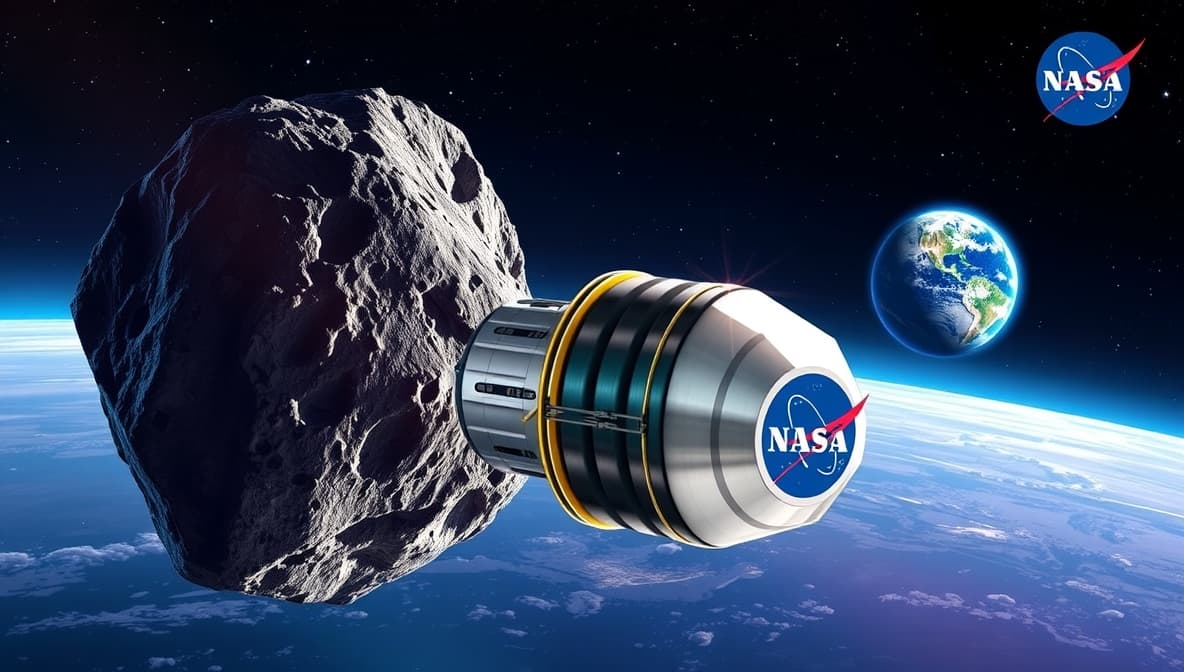
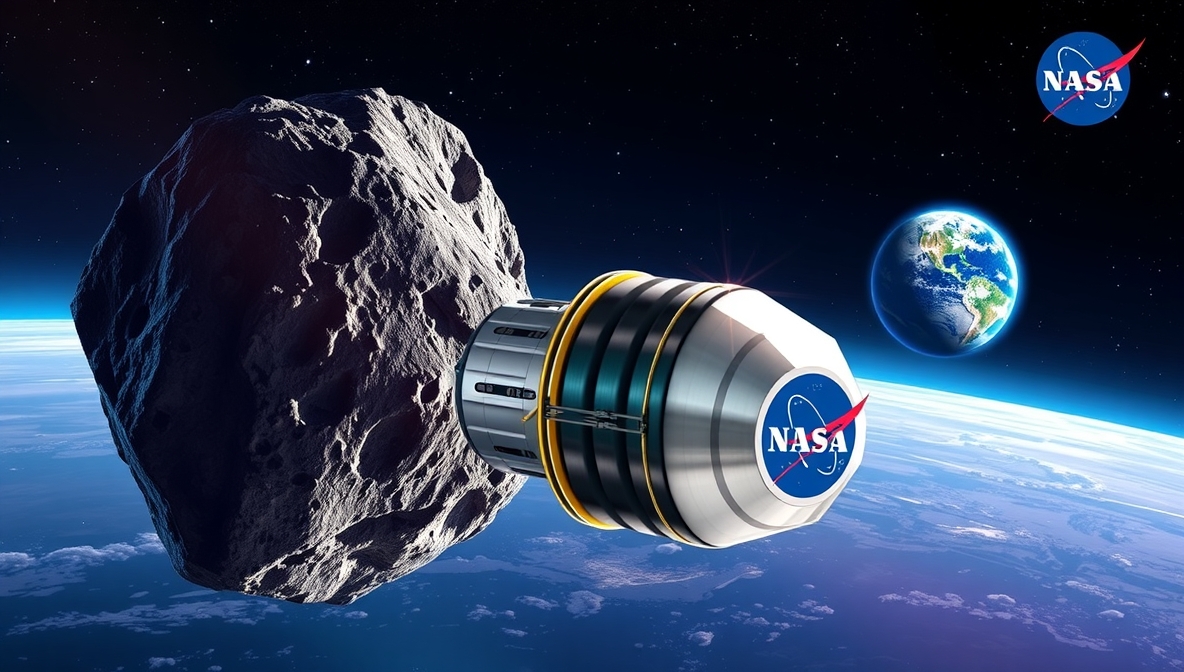
Bennu is a carbon-rich asteroid about half a kilometer across that orbits close to Earth. That made it an ideal target for OSIRIS-REx, a spacecraft launched in 2016 to study the asteroid up close, briefly touch its surface in 2020, and collect pristine material.
In September 2023, a sealed capsule with Bennu dust and pebbles parachuted down to a test range in Utah. Early analyses already showed that the samples are rich in:
- organic molecules,
- amino acids,
- and building blocks of DNA and RNA.
But results released in late 2025 go even further. Scientists have now identified:
- ribose – a five-carbon sugar that forms the backbone of RNA,
- glucose – a six-carbon sugar used as an energy source by modern life on Earth.
Together with nucleobases and phosphates found earlier, this means Bennu holds all the key ingredients needed to build RNA molecules.
That strongly supports the so-called “RNA world” hypothesis – the idea that, on the young Earth, RNA came first and acted both as a genetic storage system and as a catalyst for chemical reactions, long before DNA and proteins took over.
Important nuance:
this is not evidence of life on Bennu. Instead, it shows that the chemistry that leads toward life can develop on small, cold objects far from any planet.
What is “space gum,” exactly?
The second surprise is a strange material that researchers describe as something that once looked and behaved a bit like chewing gum. Today it is hardened, but its chemical signature is unlike anything seen before in samples from an asteroid.
This “space gum” appears to be:
- a polymer – a network of linked molecules,
- unusually rich in nitrogen and oxygen,
- likely formed when water, gases and mineral grains reacted inside Bennu’s parent body billions of years ago.
Why does that matter?
- complex polymers can act like natural chemical laboratories, trapping and concentrating smaller molecules,
- they can provide surfaces where molecules meet, break apart and form new structures.
In other words, Bennu seems to host its own version of early chemical evolution – not living cells, but a playground where the chemistry that precedes life can become more and more complex.
Stardust: six times more supernova dust than any rock studied before
The third piece of the puzzle doesn’t look organic at all: stardust.
Under the microscope, scientists have found grains that formed in the outer layers of massive stars and were later blown into space when those stars exploded as supernovae. Similar grains have been seen before in meteorites – but Bennu’s samples contain around six times more of this material than any other space rock studied so far.
This suggests that Bennu (or rather the larger body it once belonged to) formed in a region of the early Solar System that was:
- unusually rich in the ashes of dying stars,
- loaded with heavy elements like iron, silicon, phosphorus and others that are essential for rocky planets and, eventually, life.
Bennu is, in a sense, a mixture of:
- ancient stardust,
- water-altered minerals,
- and fresh organic chemistry.
When objects like Bennu collide with young planets, they don’t just bring energy in the form of impact. They also deliver the raw materials for atmospheres, oceans and prebiotic chemistry.
Does Bennu bring us closer to answering “are we alone?”
Taken together, these findings change how we think about asteroids:
- they are not just leftover rubble,
- they can be delivery systems for the ingredients of life.
If:
- sugars like ribose and glucose,
- complex nitrogen- and oxygen-rich polymers,
- and supernova stardust
were common ingredients in the region where our Solar System formed, then similar chemical “cocktails” may be forming in many other planetary systems across the galaxy.
That doesn’t prove that life is widespread – but it does suggest that the building blocks of life are probably not rare.
And what about Bennu hitting Earth?
Yes, Bennu is on the list of potentially hazardous asteroids, and there is a small, well-quantified chance of impact late in the 2100s. But for now, its main role is not as a threat, but as a teacher – a natural probe into the chemistry and physics of the early Solar System.
Conclusion: a small rock with big answers
Bennu is a reminder of one of the most powerful ideas in modern astrobiology:
the story of life doesn’t start on a planet’s surface – it starts much earlier, in clouds of gas, dust, ice and stardust from dead stars.
The Bennu samples show that:
- the building blocks of DNA and RNA can form and survive on tiny, airless worlds,
- complex polymers can arise naturally and act as miniature “labs” for chemistry,
- and the debris of ancient supernovae is woven directly into the material that later becomes planets, oceans and, potentially, living cells.
Bennu doesn’t tell us that life is inevitable. But it strongly hints that life-friendly chemistry is a natural by-product of how solar systems form.
In a universe where the same recipe repeats itself over and over, the real question may no longer be “are we alone?”, but rather:
how many other Bennu-like stories are unfolding right now, on worlds we haven’t found yet?