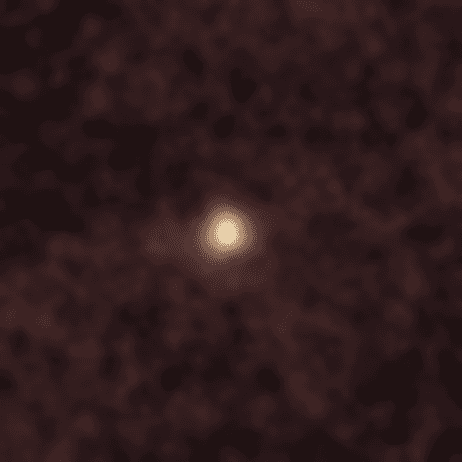
3I/ATLAS – the third interstellar visitor and NASA’s big photo hunt
When 1I/ʻOumuamua passed through the Solar System in 2017, followed by 2I/Borisov in 2019, astronomers realized that our neighborhood is occasionally visited by “strangers” from other planetary systems. We now have a third such guest – the interstellar comet 3I/ATLAS, discovered on 1 July 2025 by the ATLAS telescope in Chile.
Within days of its discovery it became clear that the object does not follow a closed ellipse, but a hyperbolic trajectory – a classic signature of a body coming from outside, from interstellar space. Its chemical “fingerprint” also suggests that 3I/ATLAS probably formed in a system older than our own, carrying ice and dust that date back to “before the Sun”.
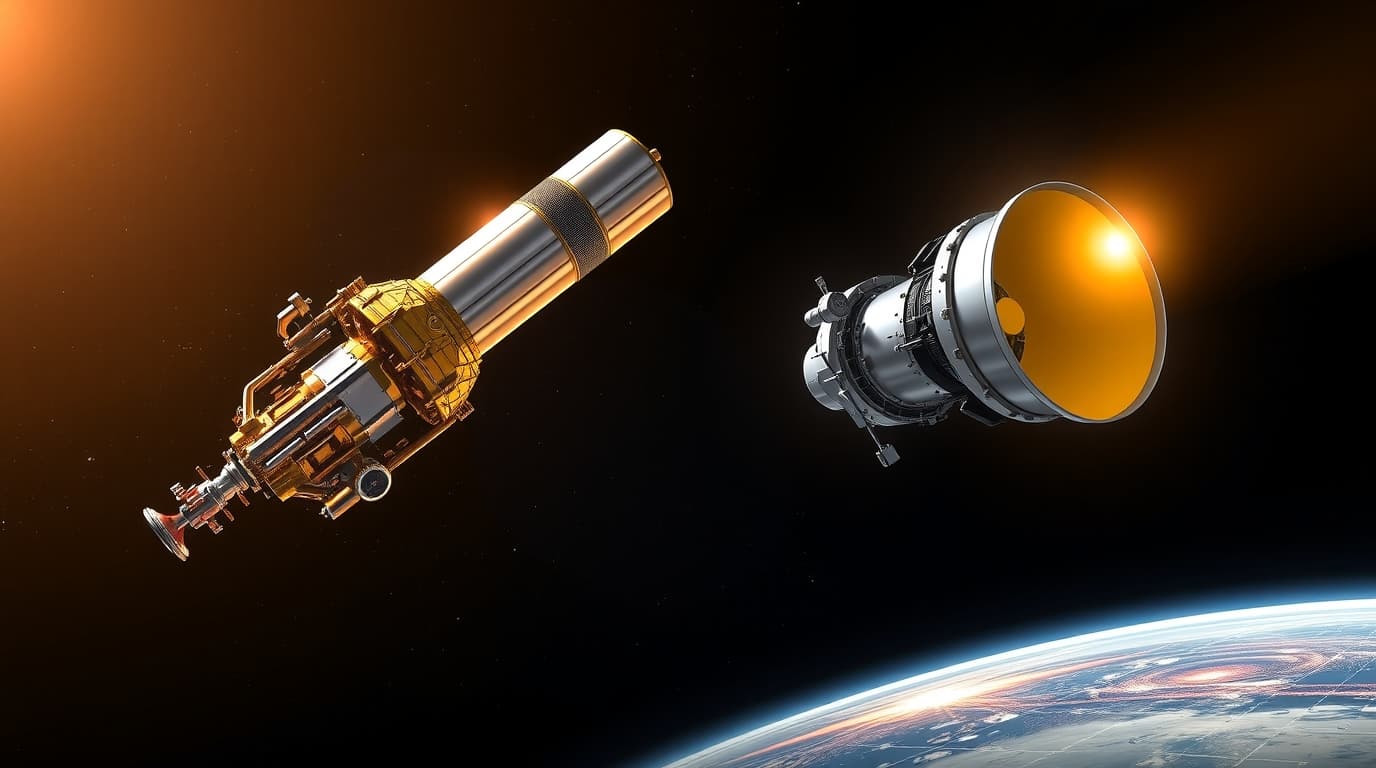
To make sure they wouldn’t miss this opportunity, NASA launched a true multi-mission “photo hunt”: the comet is being tracked simultaneously by the Hubble and James Webb space telescopes, spacecraft in Mars orbit, and even rovers on the surface of the Red Planet.
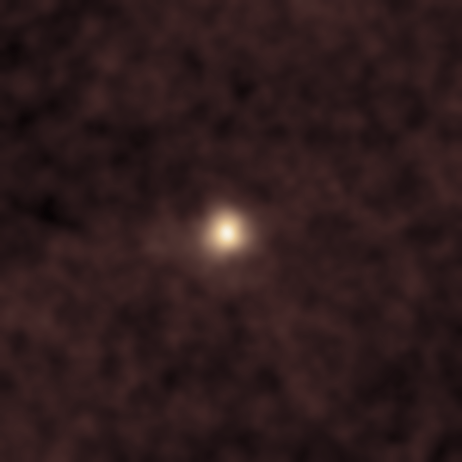
Image: NASA / ESA / David Jewitt (UCLA); image processing: Joseph DePasquale (STScI).
What exactly is 3I/ATLAS and where does it come from?
The designation 3I means “third interstellar object” (after ʻOumuamua and Borisov), while “ATLAS” comes from the Asteroid Terrestrial-impact Last Alert System, an automated telescope network that constantly searches for potentially hazardous objects. The first detections came from the Rio Hurtado observatory in Chile; follow-up observations quickly confirmed that the comet originates in another stellar system and will pass through ours only once.
The key facts in short:
- 3I/ATLAS is a comet – a mixture of ice, dust and rock that forms a coma and tail when heated.
- Estimates of the nucleus size are uncertain, but fall somewhere between a few hundred meters and a few kilometers.
- It passed closest to the Sun in October 2025, and will make its closest approach to Earth in the second half of December, at a distance of about 270 million kilometers – so there is no risk to our planet.
The chemical composition looks “familiar, yet different”: the coma contains carbon dioxide, water, carbon monoxide, cyanide and an unexpectedly large amount of nickel – a mix similar to some Solar System comets, but with nuances that point to a different chemical history of the stellar system it comes from.
How do we know it is interstellar – and why is it so special?
The main evidence that 3I/ATLAS is not “our” comet is its orbit. Instead of an ellipse around the Sun, it follows a strongly open hyperbola: the comet enters at high speed, bends around the Sun’s gravity and then leaves forever. Astronomers often compare such objects to a “cosmic slingshot” – once they pass perihelion, they never come back.
Moreover, its incoming speed and direction do not match any known family of comets from the Oort cloud. It comes from a completely different part of the Milky Way, and some measurements suggest that its parent system is several billion years older than ours, making 3I/ATLAS potentially the oldest comet ever observed.
For astronomy, that’s a gold mine:
- we get a sample of ice and dust from a completely different planetary system,
- we can compare the chemistry of “foreign” and “local” comets,
- we better understand how planetary systems form and how often they eject objects into interstellar space.
NASA’s multi-mission campaign: from Mars to Hubble and Webb
Instead of relying on a single telescope, NASA has engaged an entire fleet of spacecraft and observatories to follow 3I/ATLAS:
- Mars Reconnaissance Orbiter (MRO) imaged the comet with its HiRISE camera when it passed about 30 million kilometers from Mars. In the image, the comet appears as a small fuzzy dot with a hint of a tail – but clear enough to track the coma structure.
- MAVEN, PUNCH, STEREO and other heliophysics missions observed the comet at different wavelengths, measuring how the solar wind “whips” its tail.
- Hubble captured a detailed view of the coma – a bluish “cocoon” of dust and gas around the nucleus, with bright streaks of background stars.
- James Webb observed the comet in the infrared, helping to disentangle different types of ices and gases in the coma.
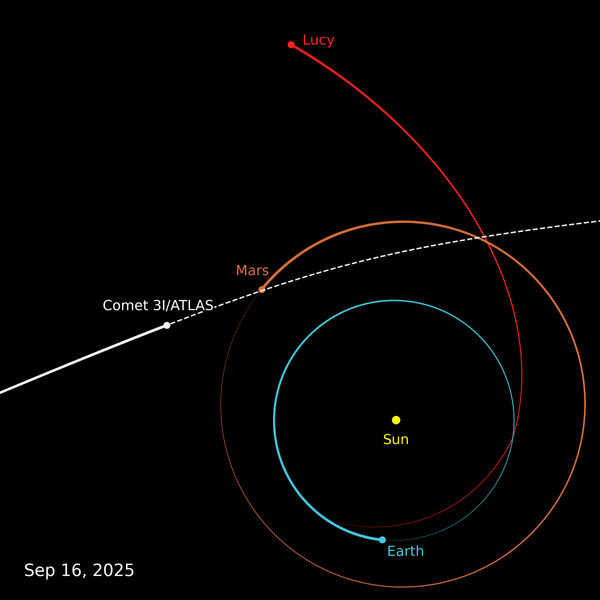
Diagram of the trajectory of comet 3I/ATLAS through the Solar System. Illustration: NASA / JPL-Caltech.
This strategy – “many eyes, one opportunity” – allows scientists to connect:
- the chemistry of the coma and tail,
- the interaction with the solar wind,
- and the precise orbital dynamics,
into a coherent story of how a comet from a completely different stellar system behaves.
Not a UFO: why scientists keep saying “this is a comet”
As with ʻOumuamua, the internet quickly exploded with theories that 3I/ATLAS might be an artificial object or even a spacecraft. This time NASA addressed the rumors right away during its press briefings: instruments see no signs of any “technosignatures” – no radio signals, no regular pulses, no strange maneuvers or anything that would suggest an artificial origin.
Instead, everything observed is consistent with:
- normal sublimation of ices as the comet is heated,
- the formation of a coma and tail,
- and an orbit that exactly matches what we’d expect from gravity acting on a natural object.
In other words, it behaves exactly as a comet should – the only unusual thing is that this one comes from a distant, foreign stellar neighborhood.
Can 3I/ATLAS be seen from Earth?
Unlike some spectacular comets of the past, 3I/ATLAS will not become a naked-eye object. Even at peak brightness it is expected to remain faint, but:
- it will be within reach of amateur astronomers with small telescopes,
- the best observing window will be late 2025 and early 2026, as it moves away from the Sun but remains sufficiently active.
For professionals and space missions, however, this is a true cosmic hunting season – the last chance to extract as much data as possible before the comet disappears into interstellar darkness for good.
Conclusion
3I/ATLAS is far more than just another comet:
- it is the third confirmed interstellar visitor,
- probably older than our Solar System,
- and the first that NASA has been able to monitor systematically with an entire fleet of spacecraft and telescopes.
For science, it is a direct sample of another planetary system, without sending a probe to another star. For us “down on Earth”, it is a reminder that the Solar System is not isolated, but constantly exchanging comets, asteroids and cosmic dust with the rest of the galaxy.
Disclaimer: This article is for informational purposes only. It does not represent an official statement from any space agency and does not constitute any guarantee regarding long-term cosmological models and interpretations.