
GJ 251 c – a new super-Earth just 18 light-years away
After thousands of discovered exoplanets, every new “super-Earth” in the habitable zone gets special attention. The latest candidate comes from the direction of the constellation Gemini: the planet GJ 251 c, a more massive version of Earth orbiting a nearby red dwarf only about 18 light-years away.
What makes this planet particularly interesting is a combination of three things:
it lies in the liquid-water zone, it is likely of rocky (terrestrial) mass, and it is close enough that the next generation of telescopes may be able to directly image it – and even study its atmosphere.

What do we know about GJ 251 c?
The star GJ 251 (also known as Gliese 251) is an M3V red dwarf in the constellation Gemini. It is much cooler and dimmer than the Sun – it shines with only about 1.5% of the Sun’s light – which means its habitable zone lies much closer to the star.
The new study shows that:
- GJ 251 c falls into the category of super-Earths, with a minimum mass of about four Earth masses;
- it orbits the star in roughly 54 days, which is the length of its “year”;
- it lies within the habitable zone, where the temperature could allow liquid water on the surface, if an atmosphere exists and has the right composition.
In the same system we already know the inner planet GJ 251 b, also a super-Earth, but much closer to the star and probably too hot for life as we know it.
How was the planet discovered?
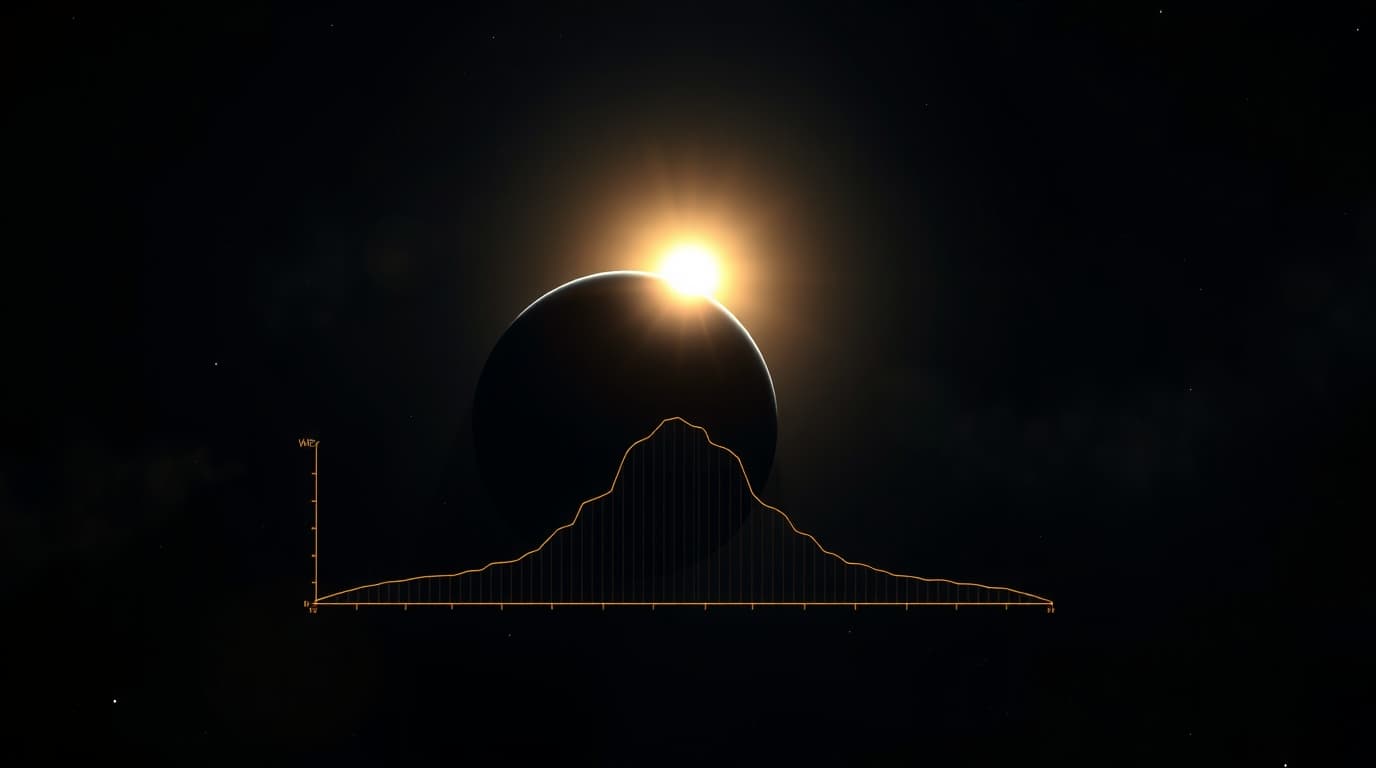
Unlike the spectacular transit “dips” captured by missions like TESS, GJ 251 c was discovered using the radial velocity method. In short:
- the Habitable-zone Planet Finder (HPF) and NEID instruments very precisely measure tiny shifts in the star’s spectrum;
- as the planet orbits, its gravity gently “wobbles” the star back and forth;
- this produces rhythmic shifts in wavelength (the Doppler effect) that sensitive spectrographs can detect.
The team combined new HPF and NEID measurements with archival data from several observatories, which allowed them to:
- refine the parameters of the inner planet GJ 251 b,
- and isolate an additional, slower signal – exactly the one corresponding to the orbit of GJ 251 c in the habitable zone.
This kind of detection requires years of patient monitoring, because the changes in the star’s velocity are on the order of just a few meters per second – comparable to a walking human.
Is GJ 251 c actually habitable?
The key question, of course, is: could there be life there? The honest answer is – we don’t know yet, but there are a few good reasons for optimism and a few serious “buts”.
On the positive side:
- the planet is probably rocky, rather than a gaseous mini-Neptune;
- it lies in the liquid-water zone, so with a suitable atmosphere it could keep water on its surface;
- the star GJ 251 is a relatively quiet red dwarf, and GJ 251 c orbits it somewhat farther out than many other “habitable” exoplanets around M dwarfs, which reduces the risk of extreme radiation and stellar flares.
On the other hand, several big questions remain open:
- what is the exact composition of its atmosphere (if it has one at all)?
- does the planet possess a magnetic field strong enough to shield the surface from stellar wind?
- what is the surface temperature once greenhouse effects are taken into account (dry, frozen world or an ocean planet)?
Without answers to these questions we can only say that GJ 251 c is “potentially habitable”, not that it truly has Earth-like conditions.
Why is this discovery such a big deal?
What sets GJ 251 c apart from many other candidates is its proximity and suitability for future observations:
- the star GJ 251 is only about 5.5 parsecs away (around 18 light-years) – our cosmic neighbourhood;
- the system is an excellent target for next-generation 30+ meter telescopes (ELT, TMT, GMT), which may attempt direct imaging of the planet;
- with sufficiently sensitive instruments, astronomers could analyze the composition of its atmosphere, search for water vapour and carbon dioxide, and even look for potential biosignatures such as combinations of oxygen and methane.
Scientifically, GJ 251 c is a “golden target” – a planet for which it is realistic to expect that in the coming decades we will obtain concrete data, not just a minimum mass and orbital period.
What does GJ 251 c tell us about the chances for life in the cosmos?
Even if GJ 251 c turns out to be dry, cold or too hot, the very fact that:
- there are rocky planets in the habitable zone so close to us,
- and that we are now finding them almost routinely,
suggests that Earth is probably not a statistical exception. With every new super-Earth in the habitable zone, the odds increase that somewhere there is a world where chemistry has taken one more step – all the way to biology.
For astronomers, GJ 251 c is a testbed for technologies of direct imaging and atmospheric characterisation. For everyone who follows space, it is another reminder that we don’t need to look billions of light-years away for a serious search for life – it’s enough to carefully listen to our wider cosmic neighbourhood.
Conclusion
GJ 251 c is much more than just another line in an exoplanet catalogue. It is:
- a super-Earth in the habitable zone,
- in a system close enough for the next generation of telescopes to study it directly,
- and one of the best candidates so far in the search for potentially habitable worlds.
In the years to come, reports from major telescopes will likely return to this name again and again. And here at InfoHelm Tech we’ll be following every new clue – from the first attempts at direct imaging to any possible hints that this super-Earth might not be completely barren after all.
Disclaimer: This article is for informational purposes only and does not represent scientific consensus or any form of financial or investment advice.