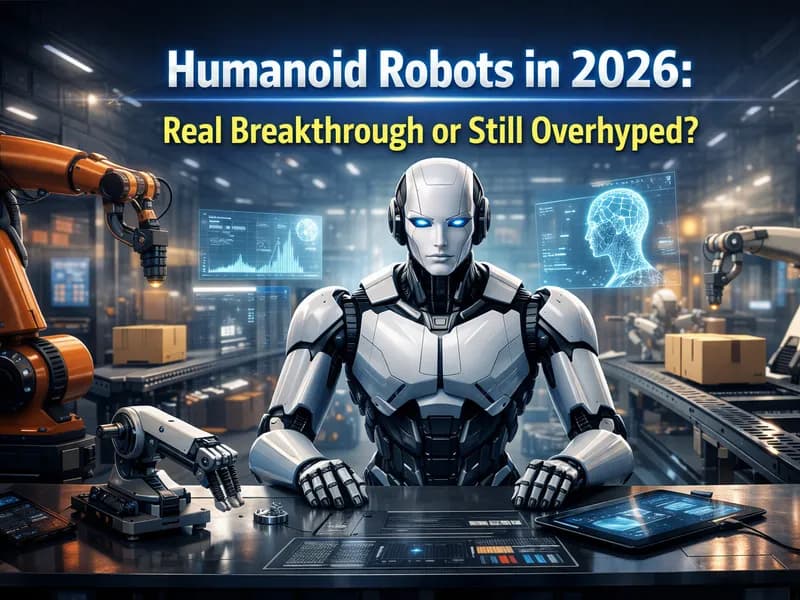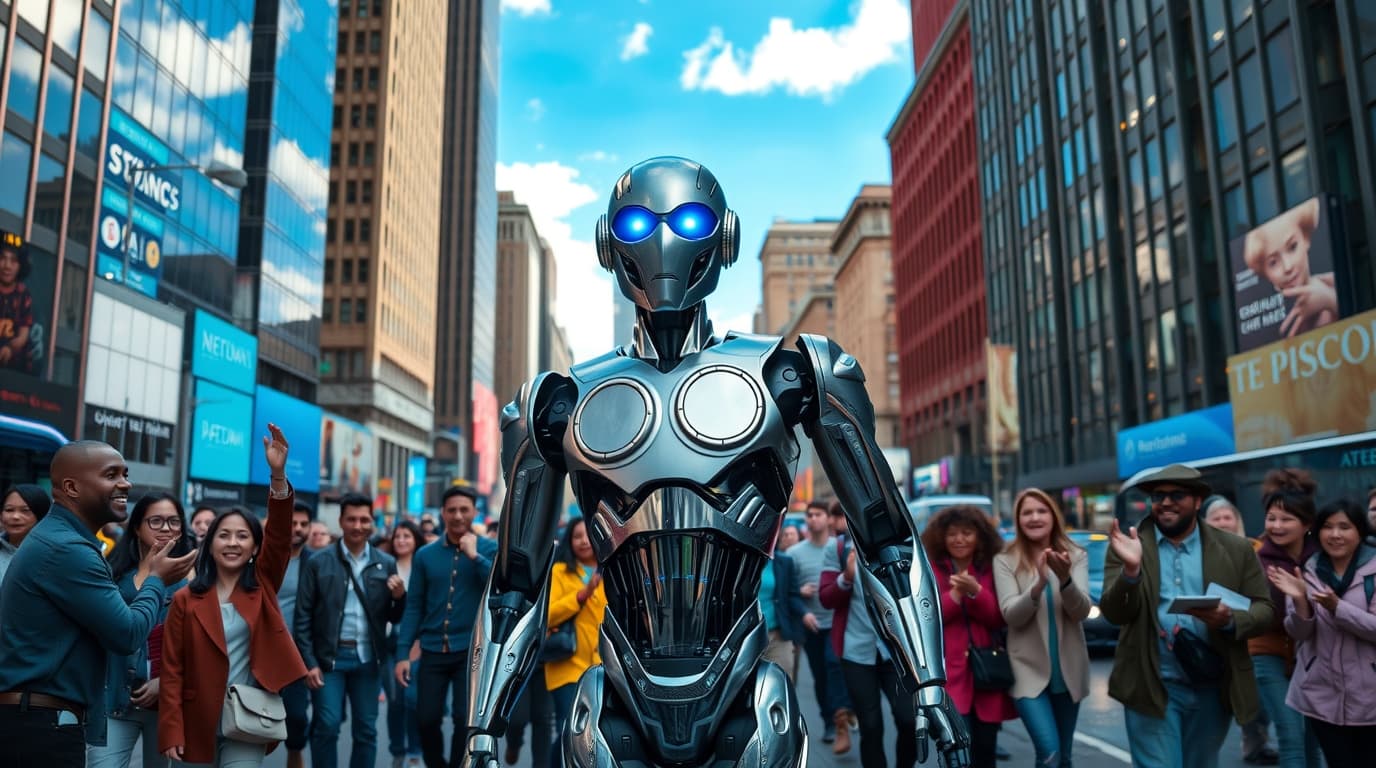
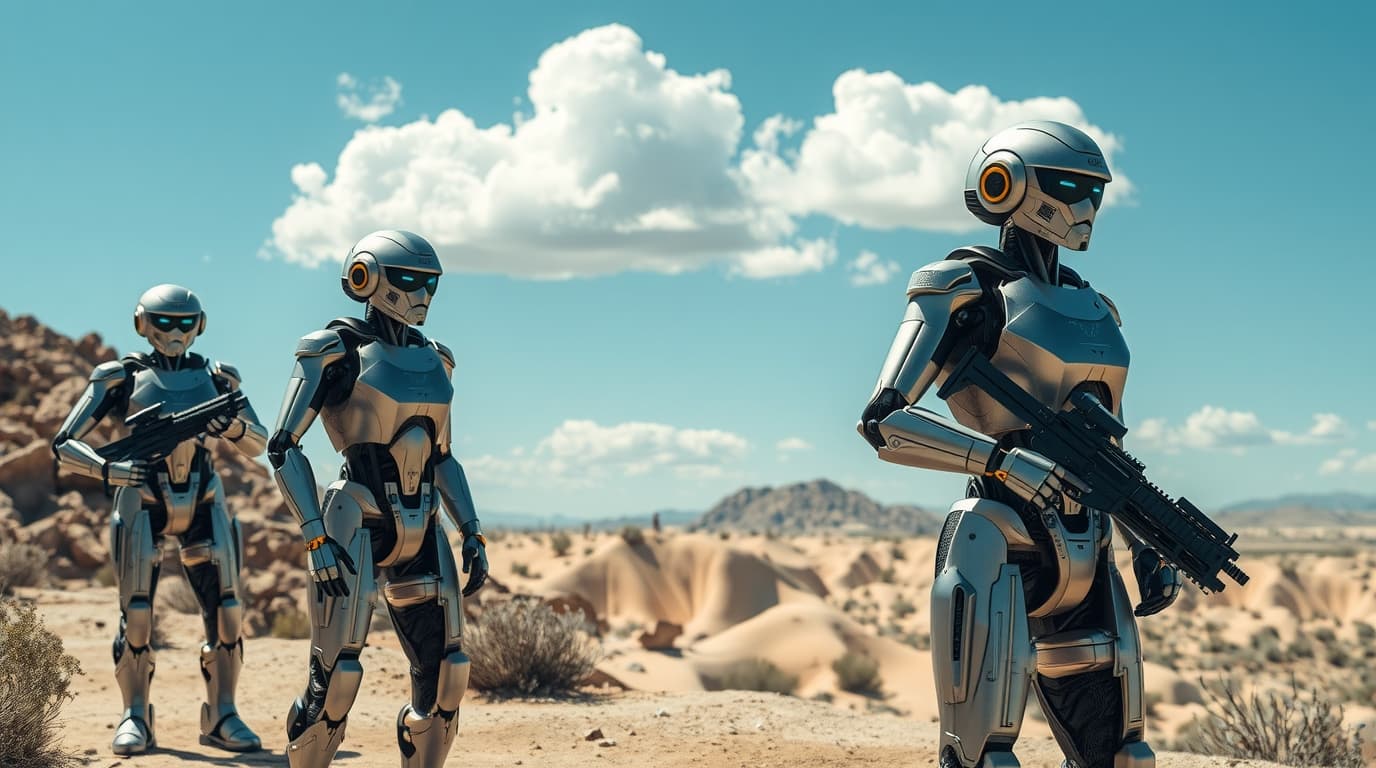
Humanoid robots at borders and shipyards – the new working class of AI
For years, humanoid robots were mostly a spectacle for viral clips and flashy tech demos: walking around labs, doing backflips at conferences, changing “facial expressions” for ad campaigns. But late 2025 brings a serious shift – robots are no longer YouTube entertainment, they are entering real, dirty and risky jobs: border patrols, shipyard inspections and monitoring massive steel structures.
Chinese company UBTech is sending its Walker S2 humanoids to the border with Vietnam under a multi–million dollar contract. At the same time, shipyards around the world are preparing to let humanoids take over part of the inspections, work in tight spaces and dangerous tasks that humans often avoid – or get injured doing.
For an everyday reader this sounds like a sci–fi blend of Terminator and the customs officer in the next lane, but for industry it is a very concrete question: what happens when borders and steel giants are watched by robots instead of humans?
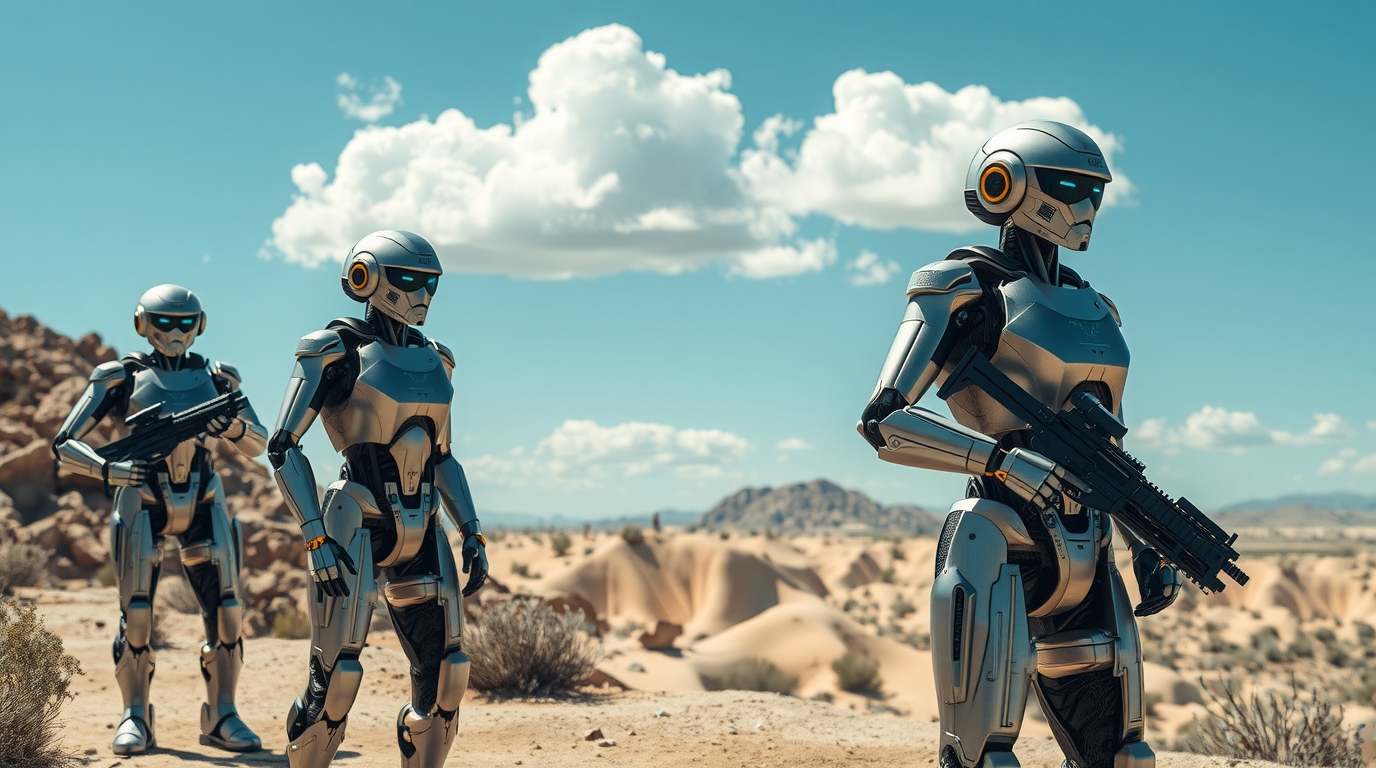
Walker S2: a border guard that never sleeps
In late November, UBTech signed a contract worth around 37 million dollars with the humanoid robotics center in Guangxi, a Chinese region bordering Vietnam. Their Walker S2 model will be deployed at border crossings as a kind of multi–tasking officer of the future.
These robots are about 170 cm tall, weigh around 70 kg and are designed to move at a steady walking pace. A key feature is that they can swap their own battery module almost autonomously: step out of duty, slide out the pack from their back, insert a charged one and go back to work. In theory, that means they can operate 24/7 without traditional rest.
At the border, Walker S2 robots are expected to take on several roles:
- Passenger guidance – directing people to counters, explaining procedures, answering basic questions via voice assistants;
- Crowd control and patrols – moving around the terminal, detecting bottlenecks, forwarding suspicious situations to human staff;
- Logistics and inspections – carrying documents, visually checking equipment and infrastructure.
Officially, this is a step toward more efficient, secure and “objective” border procedures. Critics, however, warn about darker scenarios:
- Algorithmic bias – if the model is trained on problematic datasets, the risk of discrimination simply moves from the mind of the officer into the code of the system;
- Normalization of surveillance – citizens slowly get used to being watched not by humans, but by robots packed with cameras, face recognition, motion analytics and automated risk profiles;
- Dehumanized interaction – a border crossing is already stressful, and talking to a humanoid “officer” can further amplify anxiety and the feeling of losing control.
UBTech openly talks about plans to have thousands of humanoids in real industrial environments by 2027. The border with Vietnam is, in that sense, just a starting test field.
Humanoids in the docks: Persona AI and ABS reshape shipyards
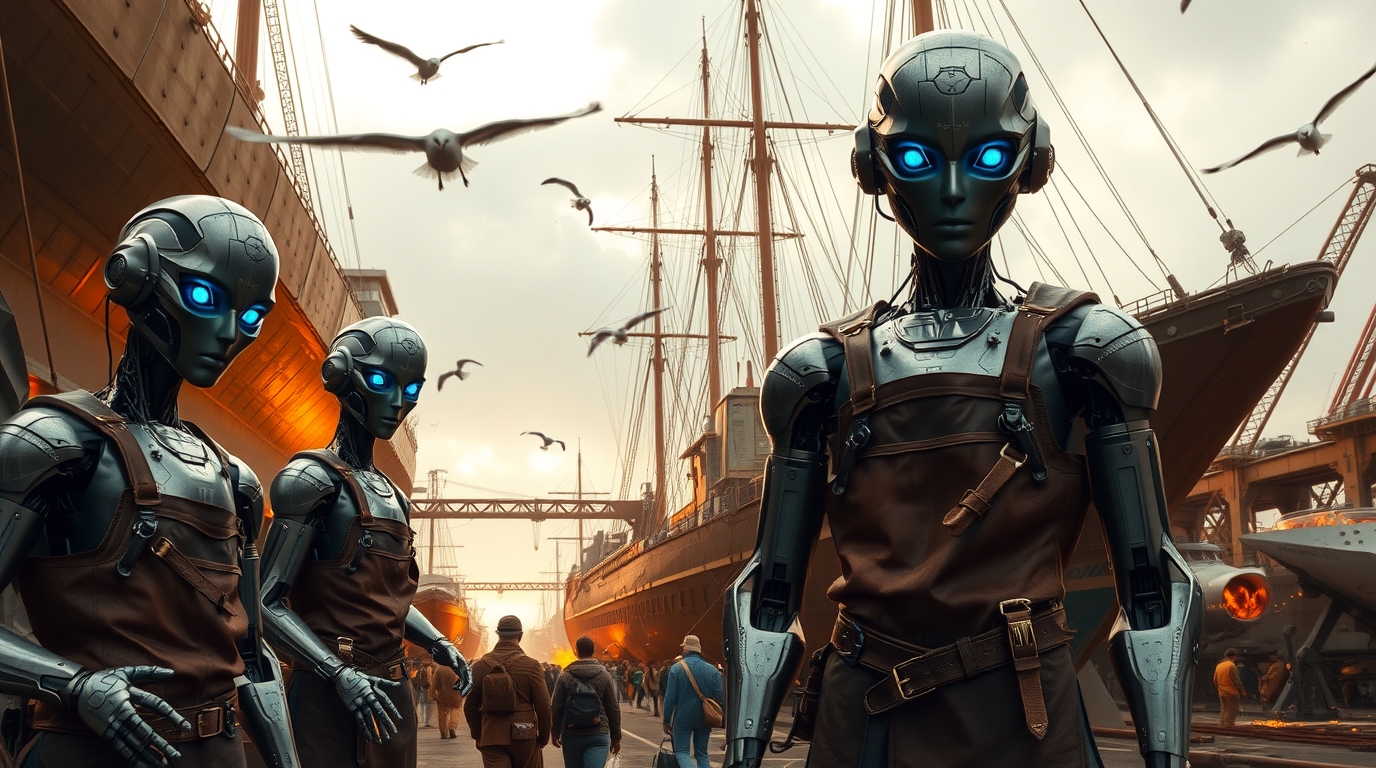
While Walker S2 is preparing to check passports and queues, another line of humanoids is slowly entering shipyards – one of the harshest work environments you can imagine: narrow passages, towering structures, welding, constant noise, extreme temperatures and a high rate of injuries.
US–based company Persona AI and classification society ABS (American Bureau of Shipping) have signed a memorandum of understanding to explore humanoid robots specialized for shipyards. Their goal is not just to “drop robots into the docks”, but to:
- develop standards and procedures for inspections performed by humanoids,
- test how robots cope with tight spaces inside ships,
- use the collected data to build digital twins of vessels and advanced risk models.
Persona AI robots use elements of NASA–grade robotic arms, giving them fine motor skills required for precise visual and tactile inspections. Instead of a traditional industrial arm bolted to the floor next to a conveyor belt, a humanoid can:
- climb down into a tank or a narrow corridor inside a ship,
- inspect welded joints,
- scan for corrosion and micro–damage,
- stream data directly into classification and maintenance systems.
For shipyards struggling with chronic labor shortages, especially in high–risk roles like welders and inspectors, humanoids look like the logical next step: “send the robot where people get hurt most often”.
But here too, serious questions appear:
- will a robot–inspector have the “final say”, or will it serve only as a tool for a human expert who signs off the report?
- what happens when an algorithm misses critical damage that later leads to an accident at sea?
- who is legally responsible – the shipyard, the robot owner, the AI developer or the classification society?
Metal marathoners: why the AgiBot A2 record matters
The third piece of the puzzle are “marathon robots”. Chinese humanoid AgiBot A2 recently set a world record by walking over 100 kilometers without stopping, over the course of a three–day journey between two cities.
At first glance, this looks like a pure PR stunt: a robot walking for Guinness, cinematic drone shots, social media buzz. But from an engineering perspective, such a “pilgrimage” is an excellent stress test for real–world use cases:
- checking long–term balance and locomotion algorithms on different terrains,
- testing autonomous navigation among pedestrians, bikes and cars,
- analyzing energy consumption and reliability of battery swapping systems on the move,
- collecting massive datasets for training the next generation of models.
For scenarios like border patrols, industrial zone monitoring or large logistics hubs, this level of endurance is exactly what matters. If a robot can walk for three days without a serious incident, it is stable enough for long shifts – at least in controlled conditions.
In other words, these records are not just “our robot walked farther than yours”. They signal that humanoid hardware and software are edging closer to matching human physical endurance in specific tasks.
Safety, surveillance and jobs: where do we draw the line?
All three stories – borders, shipyards and marathon robots – converge on the same question: what is the role of humans in a world where the humanoid shape is no longer exclusive to humans?
Surveillance and privacy
A humanoid at the border is not just a “friendly guide” – it’s potentially:
- a mobile camera with face recognition,
- a sensor for emotions (facial expressions, voice tone),
- a node in a network that connects passport databases, criminal records and risk analytics.
In theory, a robot could be less biased than a human officer. In practice, if the algorithms are trained on skewed data, bias becomes systemic and harder to challenge than a bad judgment call from a person at the counter.
Jobs and working conditions
In shipyards, humanoids can:
- reduce injuries and fatalities,
- take over the heaviest and riskiest physical tasks,
- let older workers move into supervisory and planning roles.
At the same time, the question remains: will jobs be transformed or simply erased?
If a company can replace three shifts of welders with one “steel coworker”, pressure on wages and unions will be massive.
“Human skills” in the age of robo–coworkers
Paradoxically, as robots become more capable, the demand rises for a specific set of human skills:
- understanding complex systems (legal, ethical, technical),
- mediating conflicts between workers and automated processes,
- designing human–robot interactions (UX, safety procedures, training).
More and more roles will not be “robot programmer” or “robot operator”, but hybrid jobs that bridge domains – from lawyers specialized in AI liability, to educators teaching children how to live and work alongside robotic coworkers.
Conclusion
In 2025, humanoid robots have finally crossed the line between viral clips and real contracts: Walker S2 is about to check passports at the Vietnam border, Persona AI robots are entering shipyards, and AgiBot A2 shows that marathons are no longer reserved for humans.
For industry, this is a chance to tackle chronic problems – labor shortages, dangerous working conditions and costly inspections. For society, it’s the start of a new debate: how much surveillance, how much automation, and where do we draw the line between “assistance” and “control”?
If yesterday’s humanoid model on a Paris runway was a shock and a symbol of the future of fashion, today’s robotic “border guards” and “dock workers” show that the next phase is far more down–to–earth – and far more important. Instead of asking “is this possible”, it’s time to ask how, where and under which conditions we actually want these robots to work.