40,000 Near-Earth asteroids: has Earth ever been better protected?
The European Space Agency (ESA) recently announced that astronomers have catalogued the 40,000th Near-Earth asteroid – an object whose orbit brings it relatively close to our planet. At first glance, that number sounds like the plot of a disaster movie. But in reality, more discovered asteroids does not mean there are suddenly more of them – it means we’ve finally mapped them better.
Even more interesting: roughly a quarter of that catalogue has been discovered only in the last few years, showing how quickly our detection capabilities have improved. At the same time, a tiny asteroid called 2025 TF passed closer than many satellites over Antarctica and was only noticed after its close approach – a reminder that small objects can still surprise us.
This article is a guide to what the 40,000 mark actually means, how safe we really are, and what we currently include under the term planetary defense.
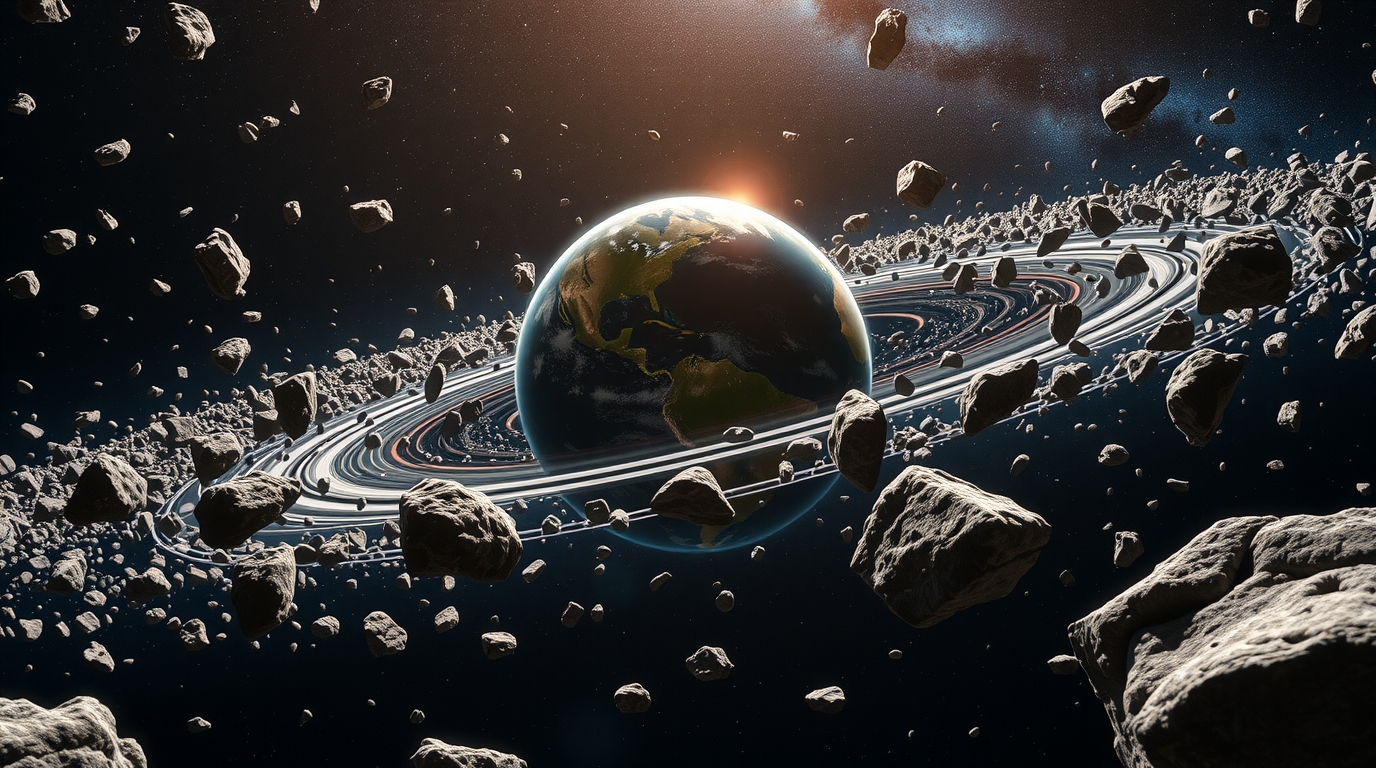
What exactly are “Near-Earth” asteroids – and how many do we have?
When space agencies talk about “Near-Earth” asteroids, they don’t mean a rock that will crash into your backyard tomorrow. They refer to well-defined classes of objects:
- NEO (Near-Earth Object) – an asteroid or comet whose orbit brings it within 1.3 astronomical units of the Sun (meaning it can cross near Earth’s orbit).
- NEA (Near-Earth Asteroid) – the subset of NEOs that are specifically asteroids.
- PHA (Potentially Hazardous Asteroid) – a special subgroup of NEAs whose orbits pass close enough to Earth’s orbit and that are big enough to cause regional damage.
To be classified as a Potentially Hazardous Asteroid (PHA), an object typically needs to satisfy two conditions:
- a minimum orbit intersection distance (MOID) of less than 0.05 AU (about 7.5 million kilometers),
- a diameter of ≈140 m or more (absolute magnitude ≲ 22), large enough to cause serious regional damage on impact.
In other words: most of those 40,000 NEAs are not PHAs, and a huge number of them are too small to reach the ground – they burn up in the atmosphere.
The numbers behind the headline
NASA and ESA regularly publish statistics on known Near-Earth asteroids. In broad strokes:
- in total, we now know over 40,000 Near-Earth asteroids of all sizes,
- among them, around 800+ objects are larger than 1 km – essentially all such potentially “global” impactors are already discovered,
- more than 11,000 asteroids are larger than 140 m, but the total population is estimated at about 25,000, meaning thousands of mid-sized objects still remain to be found,
- in the last three years alone, about 10,000 new NEAs have been discovered – a sign of rapidly accelerating detection.
For a non-expert, these numbers can sound terrifying. But the key is understanding size vs. impact frequency:
- objects smaller than ~20 m usually disintegrate in the atmosphere (the 2013 Chelyabinsk impactor was about that size and produced a powerful airburst, but no direct ground crater),
- a 50–60 m object can cause Tunguska-level damage – a massive atmospheric explosion with regional consequences,
- asteroids ≥ 140 m are “city/region killers” – estimated to strike, on average, once every tens of thousands of years,
- objects 1 km and larger produce global consequences, but are fortunately extremely rare on million-year timescales, and nearly all known ones today are not on a collision course.
So the fact that we know of 40,000 objects doesn’t mean we’re in greater danger than before – if anything, for the first time we have a real map of the threats.
What does planetary defense look like today?
Planetary defense isn’t some sci-fi superlaser. It’s a combination of:
- detection – knowing that something is heading our way at all,
- tracking and orbit calculation – estimating the impact risk,
- potential deflection – changing the orbit if necessary,
- civil protection – evacuation and preparation if there’s no time for deflection.
Hunting asteroids: sky surveys and the new “radars” of space
Today, several projects spend entire nights doing nothing but “scrolling” the sky in search of moving dots:
- Catalina Sky Survey, Pan-STARRS, ATLAS and others scan the sky with optical telescopes looking for new NEOs,
- NASA’s Planetary Defense Coordination Office (PDCO) maintains a central database and publishes monthly statistics,
- the new Vera C. Rubin Observatory is already, in early tests, finding thousands of new asteroids in just a few hours of observing – it’s expected to double the known NEA population in its first years of operation,
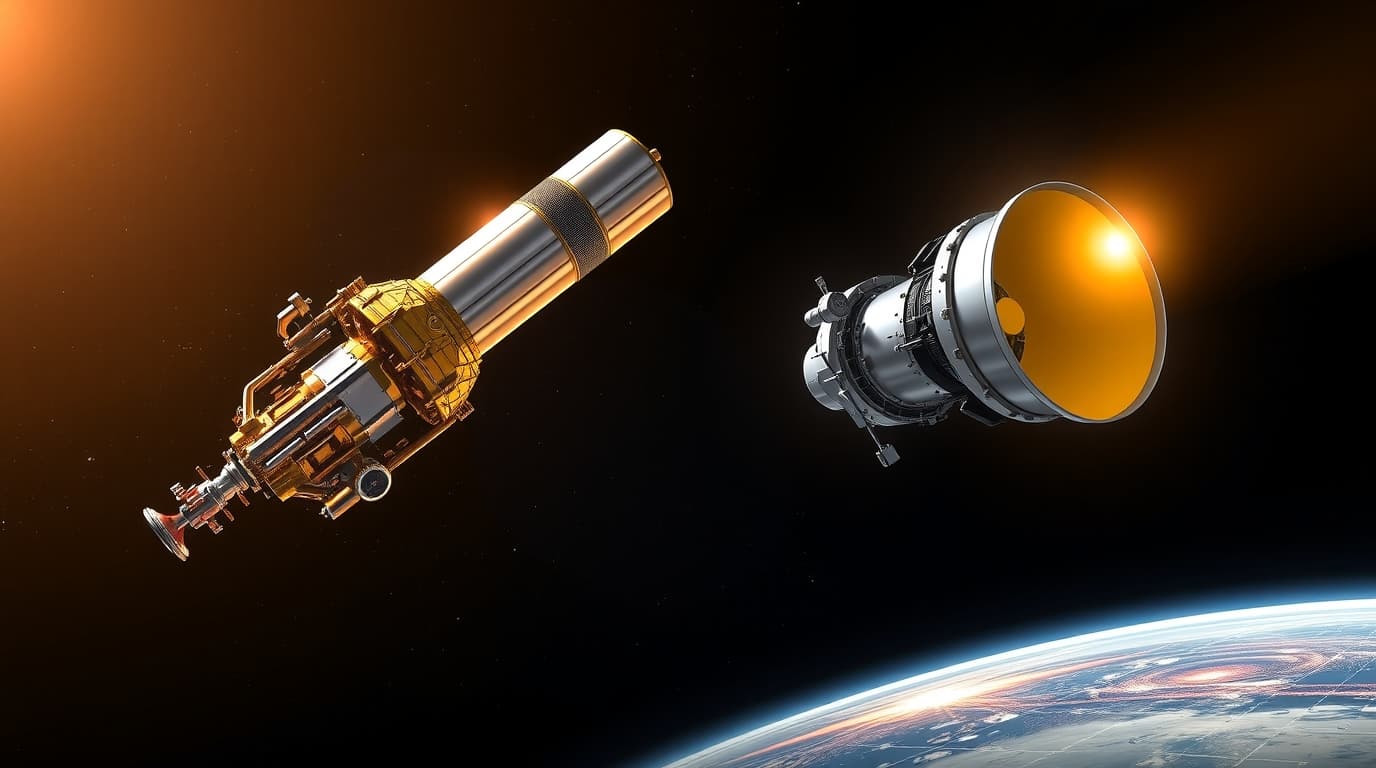
- NASA’s planned NEO Surveyor mission – an infrared space telescope – is specifically designed to hunt down large, still-undiscovered asteroids.
Thanks to these projects, we now know that no known kilometer-scale asteroid is on a collision course with Earth within the next hundred years. That’s a major upgrade compared to where we were just 20–30 years ago.
When a small rock slips “under the radar”: the case of 2025 TF
Then you get examples like asteroid 2025 TF:
- estimated diameter: only 1–3 meters (about the height of a giraffe),
- it flew by at roughly 265–430 km above Antarctica – basically at the altitude of the International Space Station,
- and it was discovered several hours after its closest approach, already heading away from Earth.
Had it been a few tens of meters larger and on a collision course, we’d have watched a spectacular fireball and possibly an airburst, depending on entry angle and composition. For satellites at those altitudes, a direct hit would have been catastrophic.
This clearly shows a limitation of today’s system: we can see big objects decades in advance, but small “pebbles” can still surprise us.
DART and Hera: the dress rehearsal for planetary defense
Detection is the first step, but what if we actually find, say, a 150–200 m object with a predicted impact in 20 years?
In 2022, NASA carried out the DART (Double Asteroid Redirection Test) mission – the first real attempt to deflect an asteroid:
- the spacecraft crashed into Dimorphos, the small moon of the asteroid Didymos,
- after the impact, Dimorphos’ orbital period shortened by about 32 minutes, far more than the mission’s minimum goal,
- follow-up studies showed that a significant part of the effect came from the “jet” of ejecta – dust and debris blasted off the surface, acting like a mini rocket engine in the opposite direction.
ESA’s upcoming Hera mission will do a forensic investigation of the impact site and the changes to Dimorphos. Together, DART + Hera are a practical proof that we can nudge an asteroid and change its path, as long as we have enough warning time.
Are we truly safe – or just better informed?
So what should an ordinary reader take away from the “40,000 Near-Earth asteroids” headline?
1. The good news: the big, civilization-ending rocks are largely mapped
- kilometer-sized asteroids that could trigger global catastrophe are, for the most part, discovered,
- none of the known ones is on an impact trajectory within the next century,
- for the objects we do know, any deflection problem would be about tech and politics – not about being caught off guard.
2. The less good news: small and mid-sized objects can still give us a scare
- Chelyabinsk- or Tunguska-scale objects are still partially outside our full control,
- while they’re not “game over” globally, they can cause significant local or regional damage if they explode above a populated area,
- for such scenarios, we’ll likely rely on short-notice warnings (days to weeks) and classic civil protection – evacuation, shelters, and infrastructure planning.
3. Over the next decades, we may become the “best-insured generation”
If current plans hold, the combination of:
- the Rubin Observatory,
- the NEO Surveyor telescope,
- next-generation ground-based surveys,
- improved algorithms and AI for detecting faint moving objects,
means that by the 2040s our catalogue of large and mid-sized asteroids will be nearly complete. Any potential impact on a decades-long horizon will likely be identified in time for deflection or evacuation.
Conclusion
The milestone of 40,000 known Near-Earth asteroids isn’t a reason to panic – it’s a sign that planetary defense has become a serious scientific discipline. More discovered objects don’t mean space has suddenly become “more dangerous”; they mean we finally have enough data to estimate risk realistically.
The giant, civilization-threatening asteroids are, to a large extent, mapped and currently pose no known threat in the near future. The more frequent – and trickier – problem comes from smaller objects like 2025 TF, which can slip by almost unnoticed and only later show up in the data.
The good news is that the trend is clear: year after year, we’re less surprised and more prepared. The next steps – missions like Hera and dedicated telescopes for dark, hard-to-spot asteroids – will likely populate the headlines again soon. And on InfoHelm Tech, we’ll be there to cover not just Near-Earth objects and planetary defense, but also the interstellar visitors like 3I/ATLAS that are rewriting our picture of the Solar System.
Disclaimer: This article is for informational purposes only. It does not represent an official statement from any space agency and does not guarantee the absolute accuracy of long-term asteroid impact risk assessments.