
RAG vs fine-tuning: how companies actually connect AI to their data (without hallucinations)
When someone says “we want AI that knows our documentation,” many assume you need to “train a model on our PDFs.” In practice, the most common solution is different: RAG (Retrieval-Augmented Generation) — a model that retrieves your data and uses it as context while answering.
Both RAG and fine-tuning are valid, but they solve different problems. Pick the wrong one and you’ll either build something expensive, or end up with an AI that sounds confident while making things up.
What is RAG (simple version)
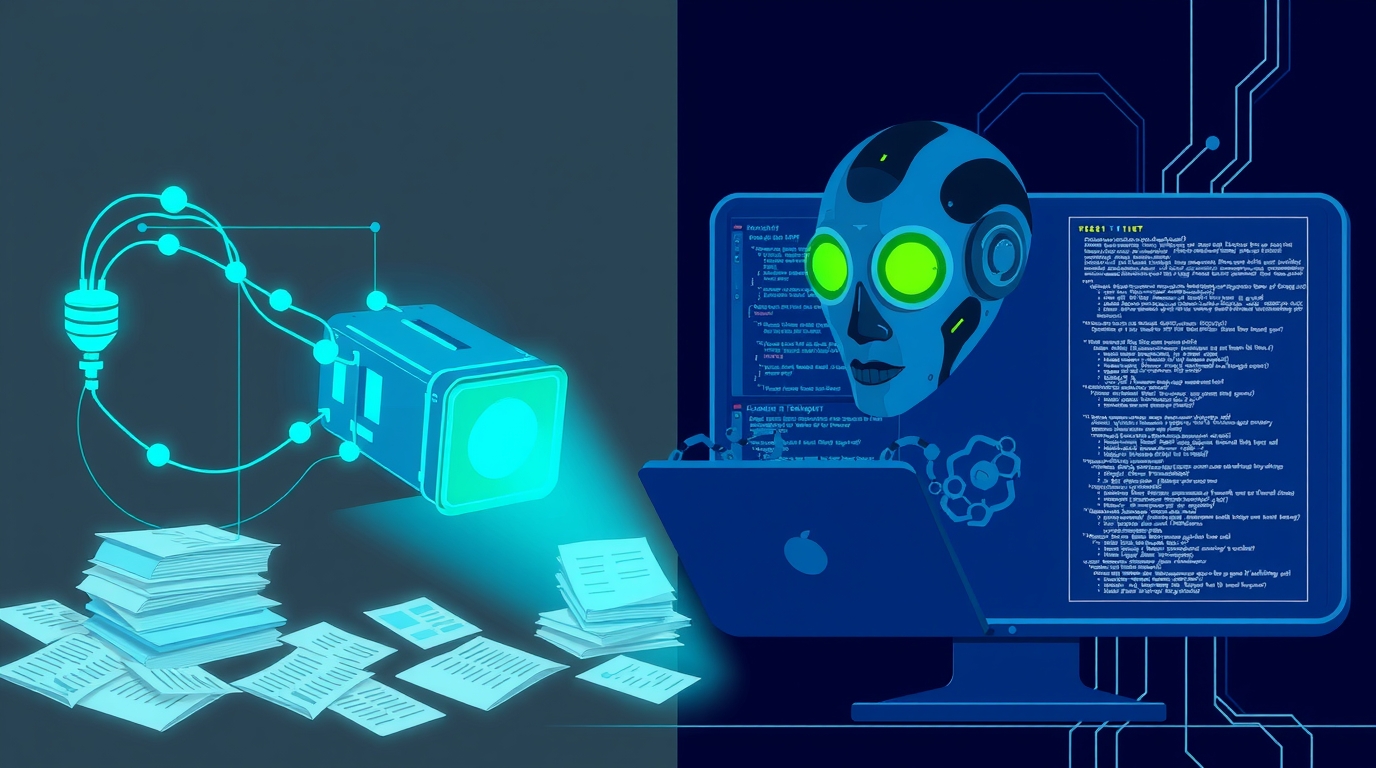
RAG means that before the model answers, it:
- turns the question into a “search,”
- retrieves relevant passages from your knowledge base (docs, FAQ, contracts, wiki),
- injects those passages into the prompt as context,
- then generates the answer.
The point: the model doesn’t have to “memorize” everything — it reads from sources when needed.
Why RAG works well
- Fast to ship (days/weeks, not months)
- Easy to update (change a document → it’s immediately reflected)
- Fewer hallucinations (because it’s grounded in retrieved context)
- Easier compliance story (data can stay controlled with access rules)
What is fine-tuning (and what it’s actually for)
Fine-tuning is additional training on your examples so the model:
- follows your preferred style (tone, formatting, structure),
- performs better on specific classifications,
- stays consistent with repeatable templates.
Important: fine-tuning is not the best way to “stuff your entire documentation into the model.” The model can still be wrong, and maintenance is harder.
When fine-tuning makes sense
- When you need a strict output format (e.g., JSON schemas, forms, standardized reports)
- When you have lots of writing rules (brand voice, terminology, structure)
- When you’re doing classification/labeling (ticket routing, intent detection)
RAG vs fine-tuning: the mental shortcut
If your data changes often → RAG
If you need behavior/style/format → fine-tuning
If you need both → combine them
The most common real-world setup: RAG + a bit of fine-tuning
In practice, many teams land on a hybrid:
- RAG provides correct, up-to-date facts from documents
- Fine-tuning teaches the model how to respond (short, formal, step-by-step, no improvisation)
It’s often the best balance: truth comes from retrieval, presentation comes from training.
7 quick checks before you invest real time and money
-
Is your problem knowledge or formatting?
Knowledge → RAG. Formatting → fine-tuning. -
How often do documents change?
Frequent changes → RAG fits naturally. -
Do you need citations or sources?
If yes → RAG makes it easier to ground answers. -
How sensitive is the data?
Plan access controls, logging, and data minimization. -
What’s the worst failure mode?
If “making things up” is unacceptable → lean on retrieval and stricter answer rules. -
Do you need multiple languages?
RAG often scales well with multilingual content because the model is simply “reading” the right passages. -
What matters more: cost per query or upfront cost?
RAG can be pricier per query (retrieval + longer prompts), while fine-tuning has higher upfront cost (training). Choose based on your use case.
Conclusion
If you’re building “AI that knows our knowledge base,” RAG is usually the best first step: faster, more flexible, and easier to maintain. Fine-tuning is great when you want consistent behavior, tone, and formatting — but it’s not a magic way to make a model “learn” all your documents.
Disclaimer: This article is for informational purposes only and does not constitute professional advice on implementation, security, or compliance.