CATL brings humanoid robots into battery-pack production: “Xiaomo” handles high-voltage connectors at scale
Humanoid robots have spent the last few years living in demo videos and viral clips. But seeing them on a real factory line — where every mistake costs money — is a different story.
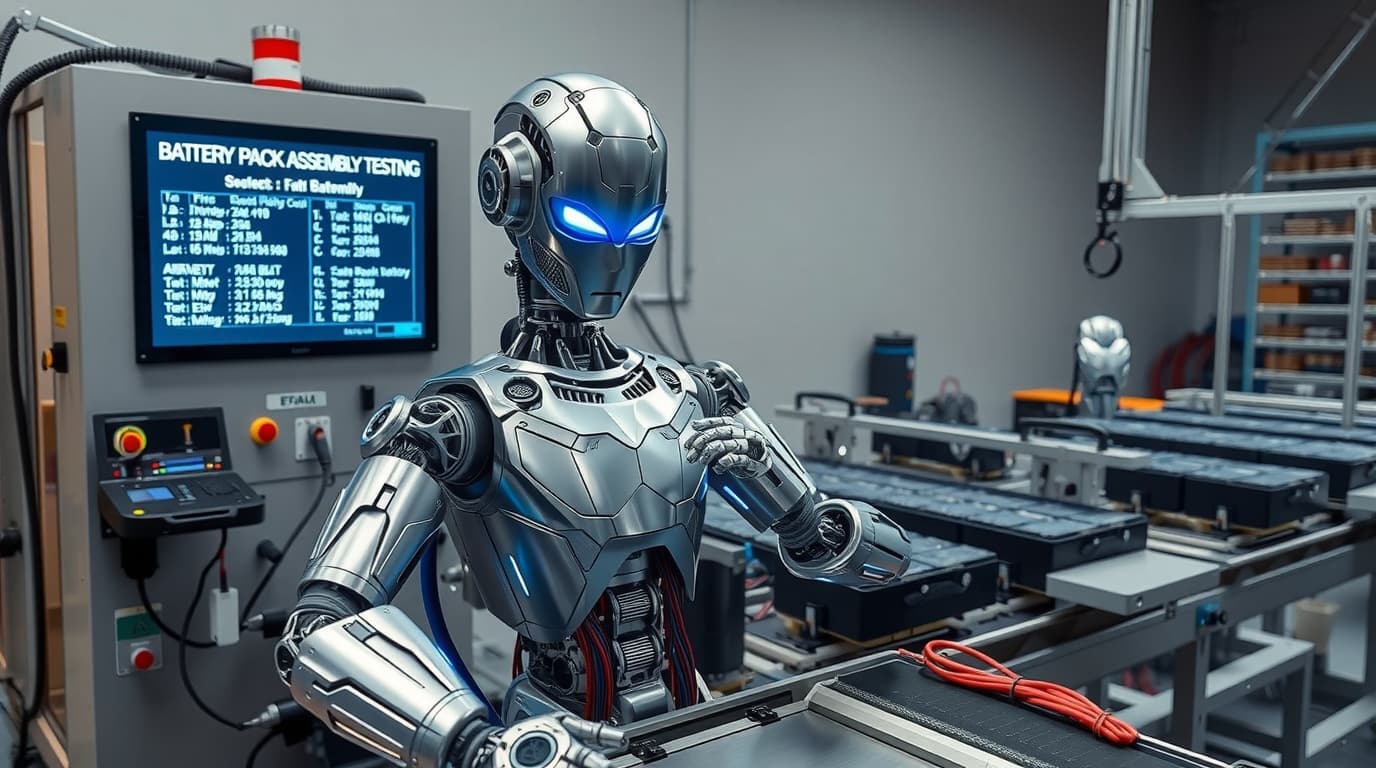
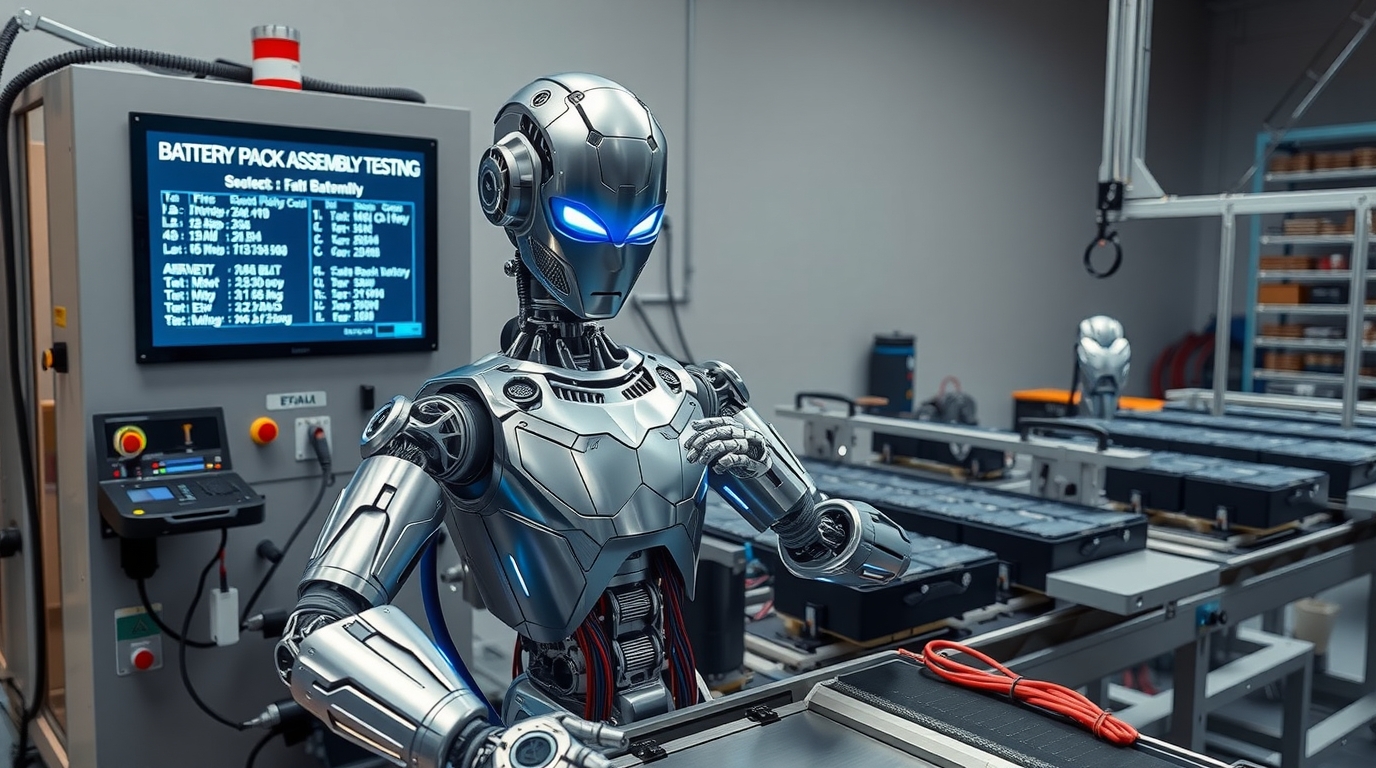
China’s CATL (the world’s largest EV-battery maker) says it has started operating a battery-pack production line in Luoyang (Henan) that uses humanoid robots at scale. The headline act is “Xiaomo” (often translated as “Little Mo,” sometimes also written as “Moz” in reports), developed in collaboration with Spirit AI Robotics.
What the robot actually does (and why it matters)
The point isn’t a humanoid walking around the shop floor — it’s taking over tasks that are:
- risky (high voltage, safety exposure),
- highly repetitive (fatigue leads to inconsistency),
- precision-heavy (misalignment means failed tests, defects, slowdowns).
CATL says Xiaomo robots handle critical steps such as inserting/connecting high-voltage connectors during battery-pack end-of-line testing. It’s one of those operations that looks simple until you realize it involves cable flex, tight tolerances, exact alignment, and basically zero room for error.
“Embodied AI” in practice: a VLA model in a real environment
One interesting detail is the kind of “brain” mentioned around this story: a Vision-Language-Action (VLA) model. In plain terms, that means the robot combines vision with contextual “understanding” to adjust its actions in real time — for example, correcting the grip or approach angle when a connector’s position varies slightly, without needing to reprogram every tiny change.
That’s a meaningful signal: manufacturing automation is moving beyond “a robot in a cage doing one thing forever,” toward systems that can handle small real-world variations and still stay reliable.
The numbers everyone watches: 99% success and ~3× daily throughput (per CATL)
CATL claims the robot achieved around 99% success on the connector task and delivered roughly three times the daily output compared to human work — largely because the robot can operate continuously.
Worth noting: these are company-reported figures, so treat them as directional rather than independently audited KPIs. Still, the direction is clear — factories are testing humanoids in the exact places where classic automation tends to have “blind spots.”
Why a humanoid and not a traditional industrial robot?
Battery manufacturing already uses plenty of industrial robots. The potential advantage of a humanoid form factor (arms, reach, mobility, human-like access) shows up where:
- there are frequent variations in component position or geometry,
- the workspace isn’t perfectly engineered only for fixed robots,
- the task requires fine manipulation of cables and connectors.
In other words, humanoids aren’t automatically “better,” but they can be more flexible in the parts of the workflow that historically still needed people.
What this could mean for the industry (and for end users)
If deployments like this prove stable at scale, the implications are straightforward:
- safer handling of high-voltage steps,
- more consistent quality and fewer defects,
- potentially faster scaling of battery-pack production.
Zooming out, this is also a milestone for “embodied AI”: it’s moving from labs into factories — first on tightly defined tasks, then gradually expanding.
Conclusion
CATL’s Xiaomo rollout is a strong marker that humanoid robotics is shifting from PR to “does the job and moves the metrics.” We’re not in a world where humanoids replace everyone — but we are entering one where they take over the riskiest and most tedious steps first. And that’s usually how technology wins.
Disclaimer: This article is for informational purposes only and does not constitute financial, investment, legal, or any other professional advice.