AI tools that are changing the way we work in 2026
Artificial intelligence is rapidly becoming part of everyday work across the world. From writing and data analysis to video production and software development, AI tools are becoming an essential part of the modern digital workspace.
Tasks that once required hours of manual work can now be completed in minutes with the help of intelligent algorithms. Because of this, companies, freelancers and creators are increasingly relying on AI tools to improve productivity and accelerate creative processes.
In the coming years, artificial intelligence is expected to become a standard component of nearly every digital profession. AI assistants, image generators and video tools are already transforming how ideas, projects and digital content are created.
Visual illustration: InfoHelm
Automation of creative and analytical work
One of the main reasons for the rise of AI tools is their ability to automate tasks that previously required significant time and effort. Writing content, analyzing data, generating visuals or editing videos can now be done much faster with the help of artificial intelligence.
In many industries, AI is no longer an experimental technology but a practical tool that allows professionals to focus on the creative aspects of their work while automating repetitive tasks.
5 AI tools that are currently influencing the way we work
The impact of artificial intelligence can be best understood through the tools that professionals already use in their daily work.
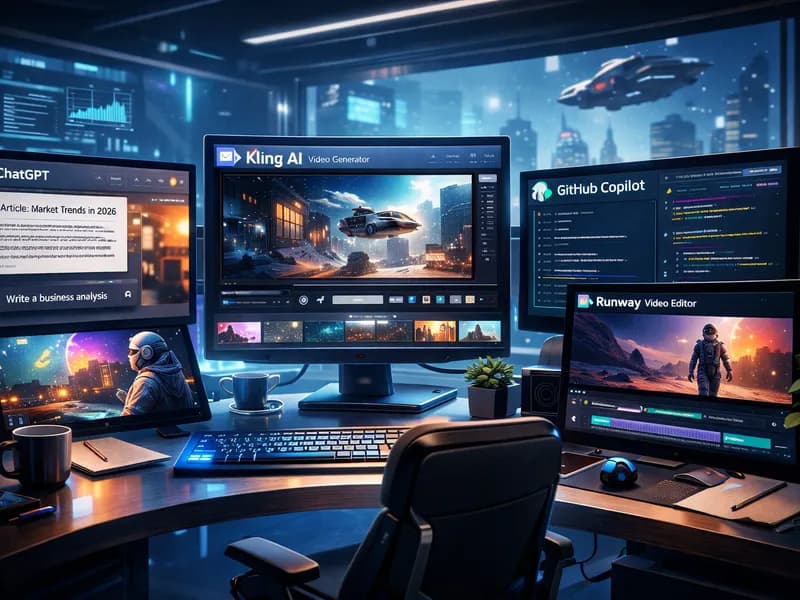
1. AI writing assistant – ChatGPT
AI writing assistants have become extremely popular among journalists, marketers and content creators. One of the most widely known tools in this category is ChatGPT.
It can assist with writing articles, preparing reports, researching topics and generating ideas. One of its biggest advantages is speed — users can obtain structured information or draft content within minutes.
2. AI image generation – Midjourney
Midjourney is one of the most recognized AI image generators used by designers and digital artists.
The platform allows users to generate high-quality illustrations and concept art simply by describing the desired visual style. This significantly speeds up the creative process and allows designers to explore multiple ideas quickly.
3. AI video generation – Kling AI
Kling AI is one of the most advanced tools for generating cinematic video scenes using text prompts.
This technology allows creators to produce short visual sequences that would otherwise require complex production and expensive equipment. Because of its realistic motion and visual quality, Kling is gaining attention among filmmakers and digital creators.
4. AI coding assistant – GitHub Copilot
GitHub Copilot is an AI assistant designed specifically for software developers.
It suggests code snippets while developers write programs, helping them complete functions faster and solve programming problems more efficiently. Many developers use it to accelerate development and learn new technologies.
5. AI video editing – Runway
Runway is a powerful platform that combines multiple AI features for video editing and visual effects.
Users can remove objects from videos, replace backgrounds and generate visual effects using artificial intelligence. Because of these capabilities, Runway has become popular among video creators and digital marketers.
Conclusion
Artificial intelligence is already transforming the way people work across many industries. From writing and data analysis to design, programming and video production, AI tools are becoming a standard part of modern workflows.
The biggest change is not only speed but also accessibility. Technologies that were once available only to large companies are now accessible to almost anyone with a computer and internet connection.
As AI technology continues to evolve, its influence on productivity and creativity will only grow.
Note: This article is educational and informational.