NVIDIA Blackwell, quantum supercomputers and AI PCs: what's really changing?
While most people are still getting used to AI chatbots and image generators, a proper hardware revolution is happening in the background. NVIDIA is pushing the new Blackwell generation of GPUs, Japan is building supercomputers for AI and quantum computing, and on regular machines we’re slowly entering the era of AI PCs with local assistants that don’t depend on the cloud.
In this article we’ll look at what exactly NVIDIA has announced, why everyone is talking about GB200, Blackwell, NVQLink and AI PCs, and what it all means for the rest of us who just want our computers to be fast, private and smart.
Blackwell – a new generation from supercomputers to gaming PCs
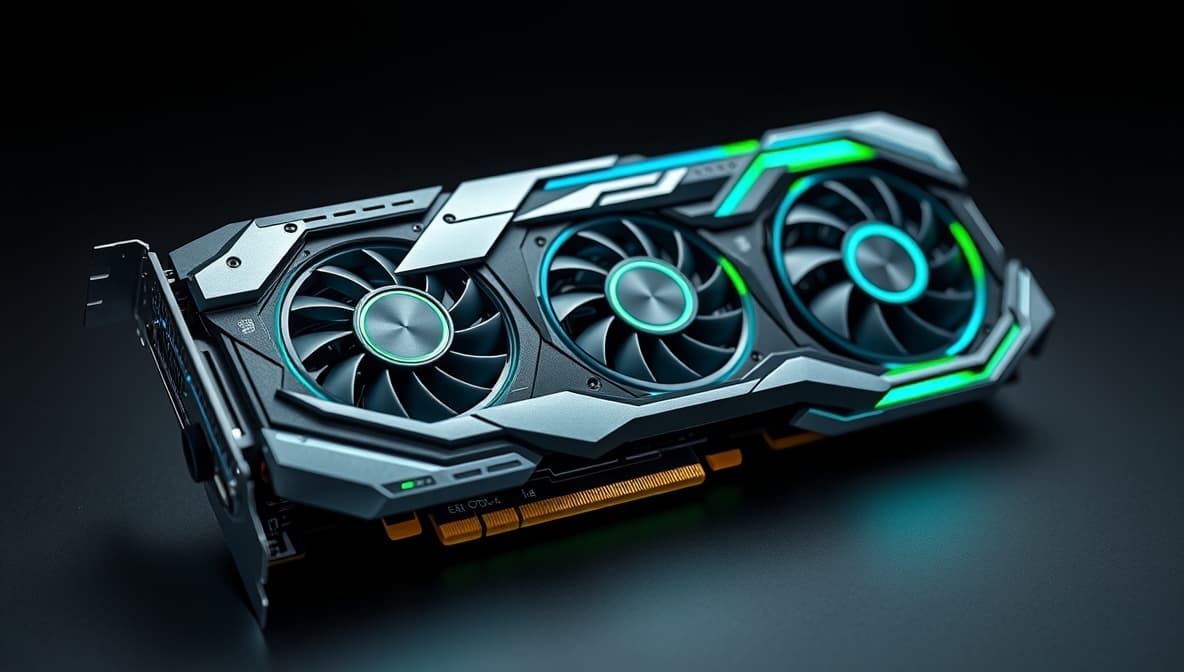
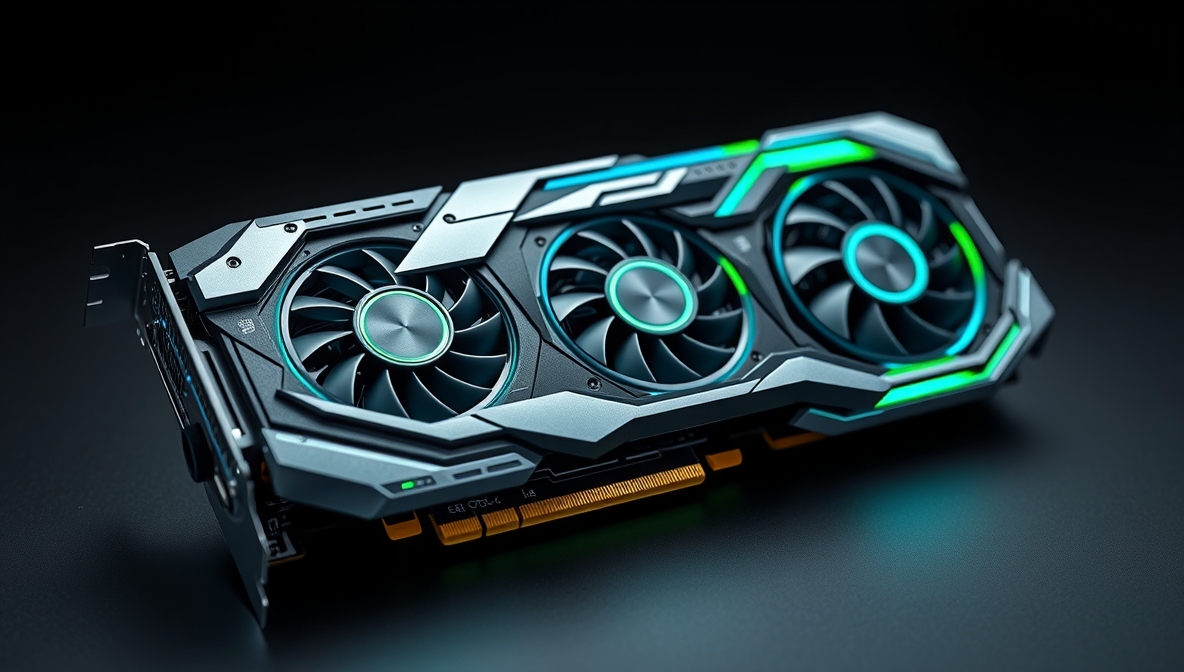
NVIDIA’s new Blackwell GPU generation appears in two main branches:
- as GeForce RTX 50 series for consumers (gaming, creators, AI tools),
- and as specialized GB200 systems for data centers and supercomputers.
The RTX 50 series succeeds the RTX 40 cards and brings:
- the new Blackwell architecture on an improved manufacturing process,
- a new generation of RT cores for real-time ray tracing (more realistic lighting, shadows, reflections),
- a new generation of Tensor cores optimized for generative AI and accelerated inference.
In other words: the same architecture that powers the most powerful AI supercomputers is slowly making its way into “regular” RTX cards in desktops and AI PC laptops. The difference is of course in scale and power consumption, but the software ecosystem is the same – the same CUDA, the same AI tools, the same frameworks.
RIKEN + NVIDIA: supercomputers for AI and quantum
Japanese research institute RIKEN and NVIDIA announced plans for two new supercomputers: one dedicated to AI for science, and the other focused on quantum computing and hybrid AI–quantum experiments.
Key points:
- the systems use NVIDIA GB200 NVL4 nodes based on the Blackwell architecture,
- they rely on thousands of Blackwell GPUs split between the AI and quantum systems,
- they are connected via ultra-fast InfiniBand networking for data transfer.
These supercomputers are meant to push forward:
- materials science,
- climate models and forecasting,
- biology and pharmaceuticals,
- advanced industrial automation,
- and the development of quantum algorithms.
For Japan this is part of a broader sovereign AI strategy – keeping key AI hardware and infrastructure “at home” instead of relying only on large cloud data centers abroad.
NVQLink: how quantum processors and AI supercomputers talk to each other
For a quantum computer to be truly useful, it doesn’t just need a cold lab and qubits – it also needs a way to talk to a classical supercomputer. That’s where NVIDIA NVQLink comes in.
NVQLink is a technology that:
- directly connects quantum processors and control electronics to GPU supercomputers,
- offers a “turn-key” solution for labs that want to combine quantum hardware and AI accelerators,
- solves latency and bandwidth issues that appear when you try to drive quantum experiments over traditional interfaces.
Why does this matter?
Because the realistic scenario for the coming years is hybrid computing:
- the quantum part handles what it’s good at (certain types of optimization, specific simulations),
- the GPU supercomputer does everything else – training models, processing data, visualizing results.
NVQLink is the glue that holds it all together.
AI PCs and local AI assistants on RTX machines
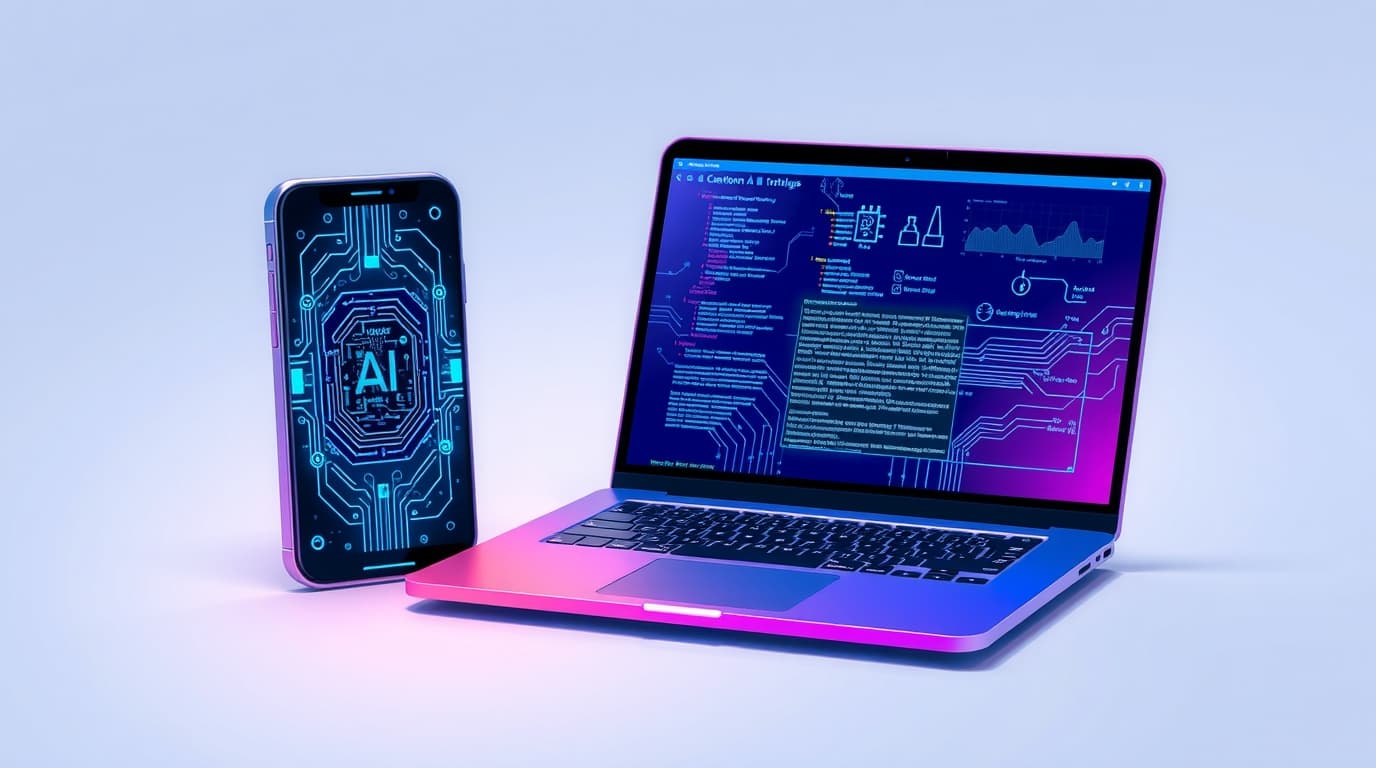
While monster systems with thousands of GPUs are being built in data centers, NVIDIA is also pushing the AI PC story – a standard desktop or laptop with an RTX card that runs local AI.
The idea behind the AI PC is:
- you have a local AI assistant running directly on your GPU or NPU,
- it can index your documents, images, emails and the project you’re working on,
- it answers questions and creates summaries without sending everything to the cloud.
This is especially interesting for:
- people working with sensitive data (medicine, law, finance),
- companies that don’t want confidential documents to end up on third-party servers,
- content creators who need AI help but want to minimise their dependence on the internet.
As the RTX 50 series and later generations make their way into more laptops and desktops, such local AI assistants will become a standard part of Windows and Linux environments – just like we already take Wi-Fi and a webcam for granted.
What all this means for regular users
If we boil everything down to a practical level, a few clear trends appear:
-
AI is moving closer to the user
Not all AI will stay “in the cloud”. We’ll see more and more local AI assistants running on RTX cards or specialized NPUs, especially on business laptops and creative workstations. -
Blackwell is the backbone of the new AI era
The same architectural foundations sit behind:- RTX 50 cards for gaming and content creation,
- GB200 systems in supercomputers,
- the AI PC concept with local assistants.
That means software, drivers and tools will increasingly be optimised specifically for this generation.
-
Quantum + AI will form a tandem, not a competition
Quantum computers are unlikely to “replace” classical ones – they’ll complement them.
NVIDIA is already building tools that connect these two worlds and make it easier to experiment with hybrid algorithms. -
When does it make sense to upgrade your hardware?
- If you’re aiming for gaming + AI tools (video, music, generative graphics, local models), the RTX 50 series (or an equivalent AI-focused competitor) is a logical next upgrade.
- If you work with sensitive data, local AI search and assistants on an RTX card can be a huge advantage – you get AI, but your data stays with you.
Where does the InfoHelm audience fit into all this?
For the InfoHelm audience these are the key takeaways:
- if you care about AI development, trading bots, your own AI apps, you need to know where hardware is heading – it determines how much of your workload you can realistically move to local machines;
- the AI PC is no longer just marketing hype, but a real option for people who want to work with AI models and data while keeping more control over privacy;
- data centers, supercomputers and quantum machines are not some parallel universe – the tech being tested there (Blackwell, advanced networking, quantum links) quickly “leaks” into the consumer segment through new GPU generations and AI tools.
Conclusion
With the Blackwell architecture, NVIDIA is effectively setting a new standard: from supercomputers and quantum labs, through data centers, all the way down to AI PCs on the average user’s desk.
If you’re thinking about your next hardware upgrade or planning to work more seriously with AI models, it’s worth keeping an eye on this generation of hardware – because a large part of upcoming AI innovation over the next few years will be built on top of it.
Disclaimer: This article is for informational purposes only and does not constitute investment or financial advice.