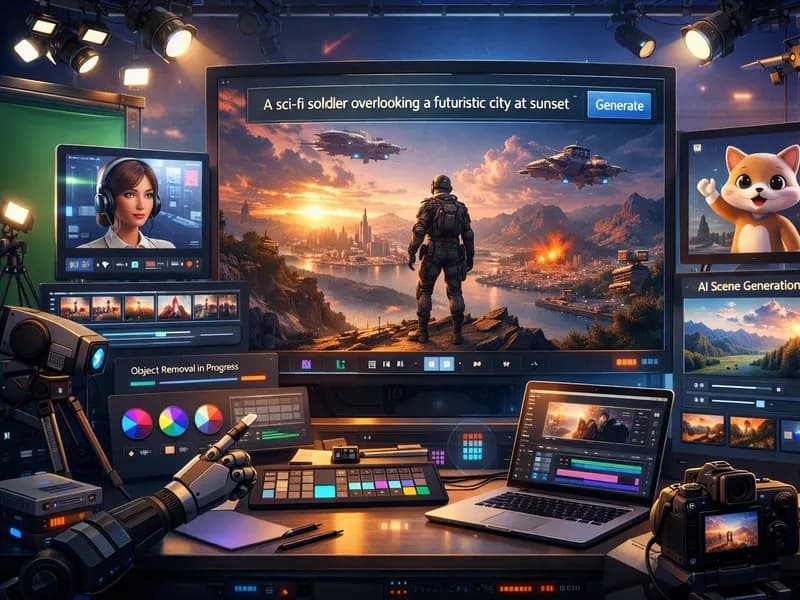
Top AI video tools in 2026: from idea to finished video
Artificial intelligence has dramatically changed the way video content is created. Tasks that once required expensive equipment, large production teams and complex editing workflows can now be done using a few AI-powered tools.
Modern AI systems can generate scenes from text, animate characters, assist with editing and even produce entire video clips. Because of this, more creators, marketers and independent filmmakers are incorporating AI into their video production process.
Below are some of the most interesting AI tools that are already transforming how video content is produced.
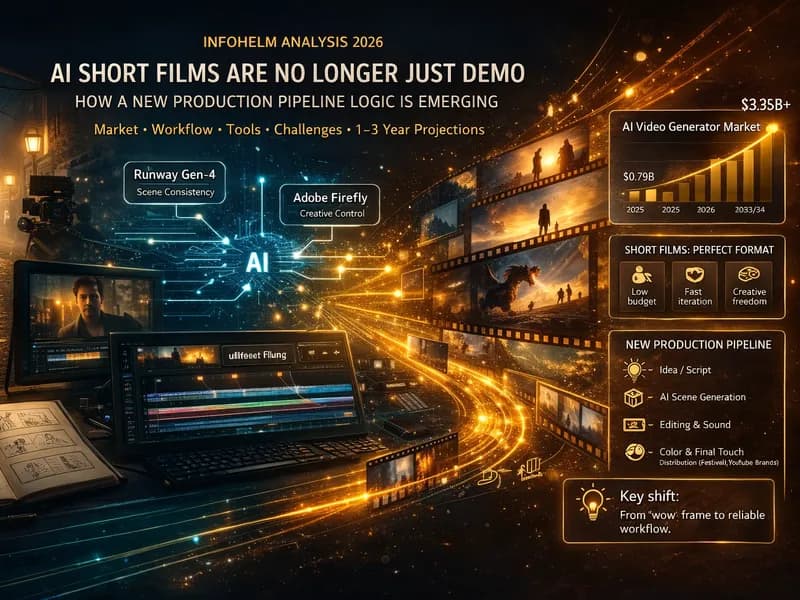
Visual illustration: InfoHelm
Kling AI – generating cinematic scenes
One of the most impressive video generation tools currently available is Kling AI. This model allows creators to generate short video scenes from simple text prompts.
Users can describe a situation, lighting conditions and camera movement, and the AI produces a dynamic video sequence. Thanks to its realistic motion and visual detail, Kling has quickly gained popularity among creators experimenting with AI filmmaking.
Runway – an AI studio for video editing
Runway has become one of the most recognized AI platforms for video production. It combines several powerful features including video generation, background replacement and object removal.
Creators often use Runway as a central hub for their AI workflow because it allows them to combine generated scenes with traditional footage in a seamless way.
Pika – fast animation from text
Pika is another tool that enables creators to generate animated video clips directly from text prompts. The main advantage of this platform is its simplicity.
Even users with little experience in video production can quickly generate visually interesting clips, which makes Pika popular among social media creators.
Midjourney – visual style and concept design
Although Midjourney is primarily known as an image generation tool, it plays an important role in video production workflows.
Creators often use it to generate concept art, character designs and visual styles that later serve as the foundation for AI-generated video scenes in other tools.
Conclusion
AI video tools are evolving rapidly and are making advanced video production accessible to a much wider audience. By combining scene generation, animation and automated editing, creators can produce complex projects with far fewer resources.
As AI technology continues to develop, we can expect even more realistic video generation and entirely new creative possibilities for filmmakers and content creators.
Note: This article is educational and informational.