Memecoin vs altcoin: a beginner’s guide (and how not to fall into a trap)
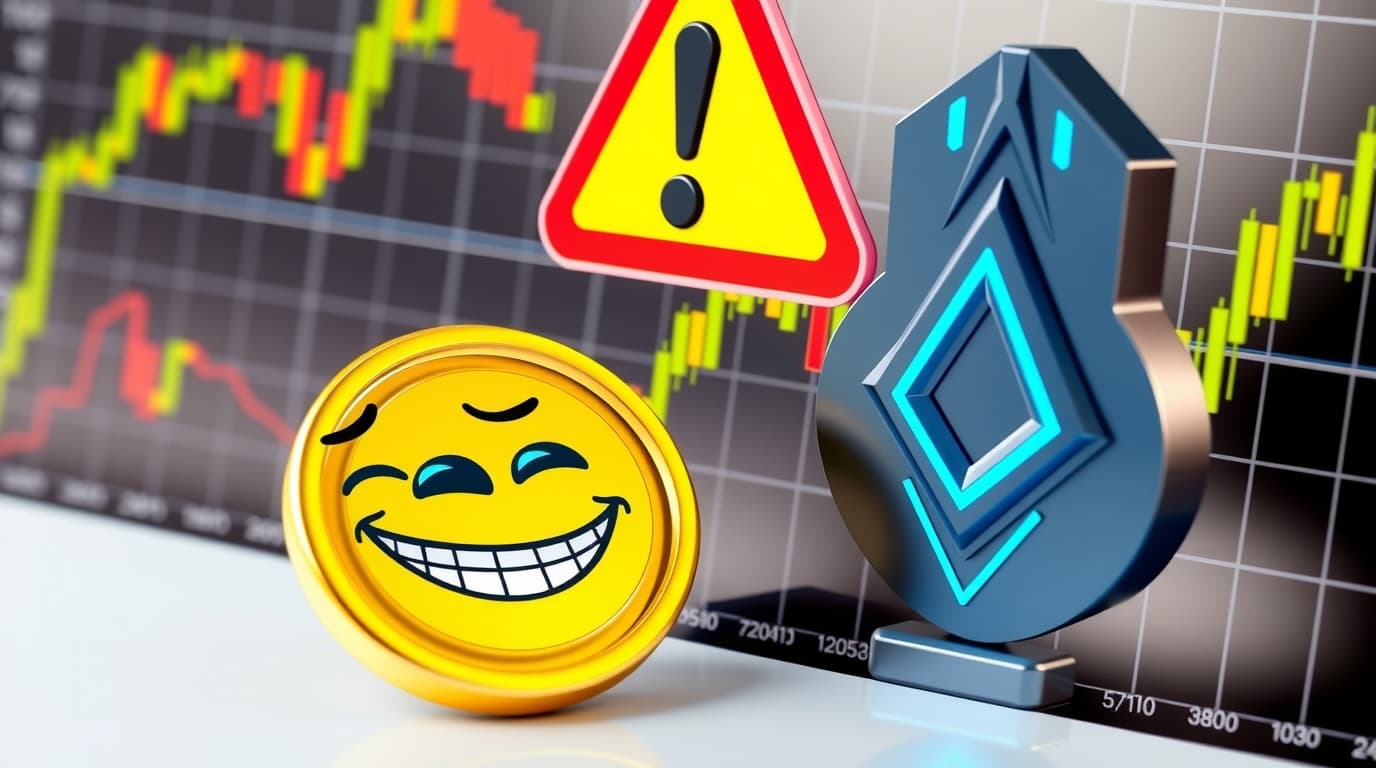
If you’ve ever seen a coin that “pumps 300% in a day” powered by memes and viral posts — you’ve seen the world of memecoins. And yes, sometimes people make insane gains. But far more often, the opposite happens: liquidity dries up, the price collapses, and the “community” disappears overnight.
That’s why it’s smart to understand the core difference between memecoins and altcoins, and to know which signals to check before you even consider buying.
What is an altcoin?
An altcoin is “any coin that isn’t Bitcoin” (in the broad sense). In practice, an altcoin can be:
- a smart-contract platform,
- a DeFi token,
- a gaming or infrastructure token,
- or simply a speculative coin trying to build some utility.
Altcoins usually come with a utility story — at least on paper.
What is a memecoin?
A memecoin is a coin whose value largely comes from:
- virality,
- internet culture,
- community hype,
- narrative waves, rather than real utility.
That doesn’t mean memecoins can’t gain utility later — but at the start, the main engine is almost always attention.
The key difference: “utility” vs “attention”
The simplest way to put it:
- Altcoins try to justify value through technology or a product.
- Memecoins try to justify value through attention and momentum.
In a bull market, both can rise. In a panic, memecoins often fall harder because hype disappears first.
Why memecoins are especially risky
1) Liquidity can vanish
A memecoin can show a big market cap “on paper,” but with thin liquidity, price can move violently with small trades.
2) Rug pulls and scams are more common
With newer tokens it’s easier to:
- promise liquidity locks and then remove liquidity,
- keep a huge portion of supply in a few wallets,
- or implement mechanics that make selling difficult.
3) Market psychology works against you
FOMO (fear of missing out) and “exit liquidity” are real. Always ask yourself:
If I’m buying now — who’s selling to me, and why?
Tokenomics: 6 things to check before anything else
Here’s a quick evergreen checklist:
-
Who holds the supply?
If the top 10 wallets hold a massive share, risk is extreme. -
Is liquidity locked — and for how long?
If not, rug pull risk is far higher. -
Are there “tax” mechanics?
Some tokens add buy/sell taxes that kill trading or act as a hidden drain. -
Inflation and unlock schedule
Big upcoming unlocks can create strong selling pressure. -
Market depth (liquidity depth)
The price isn’t the point — can you exit without brutal slippage? -
Where is it traded?
Only a DEX + one thin pair usually means much higher risk.
“Altcoin season” — and where memecoins often show up
A common cycle looks like this:
- Bitcoin runs first
- capital rotates into large-cap altcoins
- then into mid/small caps
- and finally into memecoins (highest risk, biggest euphoria)
That’s why memecoin mania often arrives later — when markets are already overheated.
A smarter approach (if you still want to “play”)
Not investment advice — just risk-management logic:
- Treat it like a lottery ticket, not savings.
- Define your exit in advance (profit target and stop).
- Don’t enter a token you don’t understand mechanically (tax, lock, liquidity).
- Don’t use money you can’t afford to lose.
- Spread risk: three small attempts often beat one all-in bet.
Conclusion
Memecoins can be fun and sometimes insanely profitable — but they’re also the riskiest corner of crypto, because price often depends on attention that can vanish fast.
Altcoins are still risky, but they at least have a chance to justify value through technology or real-world use.
If you step into this space, your best superpower isn’t luck — it’s checking tokenomics, liquidity, and supply concentration before you hit buy.
Disclaimer: This text is for informational purposes only and does not constitute financial, investment, legal, or any other professional advice.