
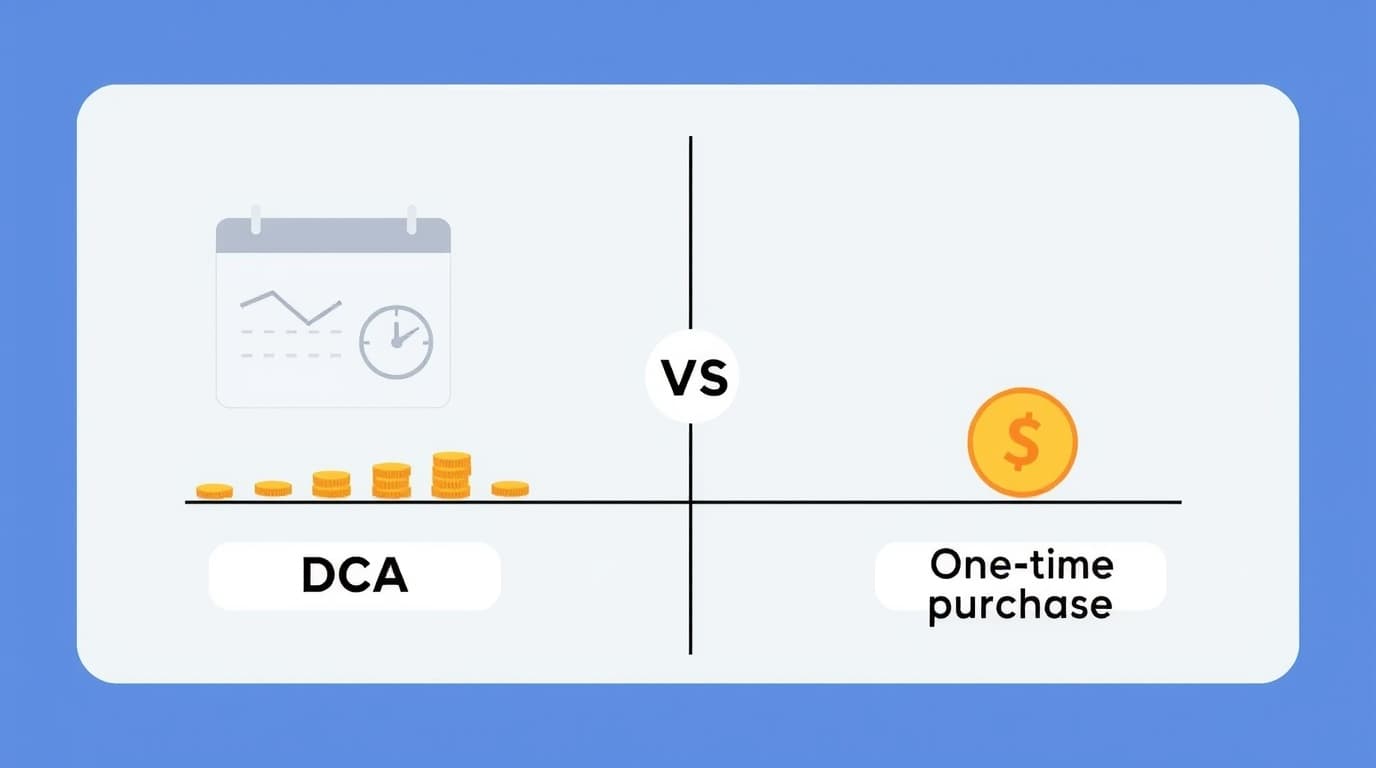
DCA vs lump sum: how to enter crypto without trying to time the bottom
The most common beginner mistake isn’t picking the “wrong” coin—it’s trying to find the perfect entry point. Crypto is volatile, and even experienced traders get timing wrong. That’s why two strategies keep coming up as the most practical: DCA (buying gradually) and lump sum (investing all at once).
This guide isn’t about predicting the market. It’s about entering rationally—with less stress, clear rules, and realistic expectations.
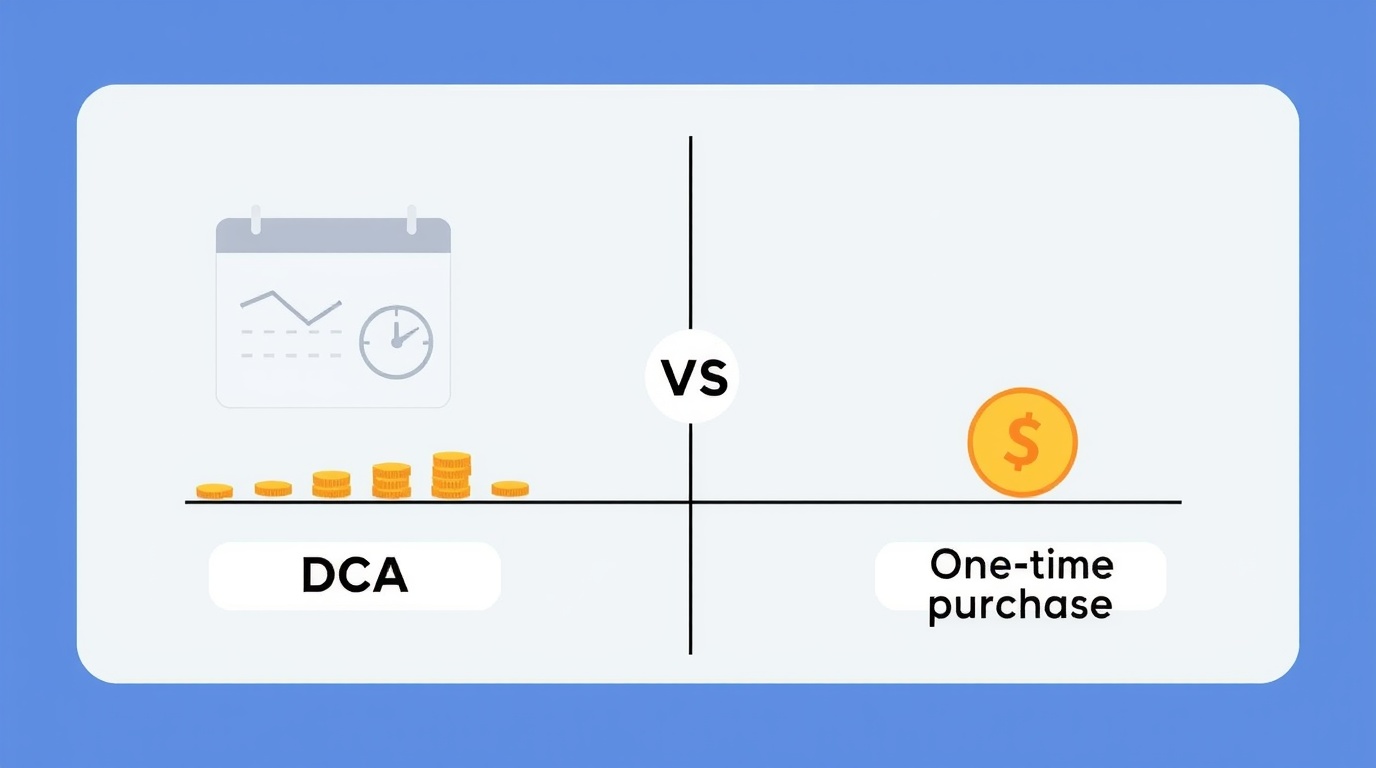
Visual illustration: InfoHelm
What DCA (Dollar-Cost Averaging) is
DCA means investing the same amount at regular intervals (weekly or monthly), regardless of price. The goal isn’t to “call the bottom,” but to achieve a blended average entry price and reduce the impact of short-term volatility.
Why people like DCA:
- less stress and less need to time entries
- discipline replaces emotion
- reduces the damage of a single bad entry point
Where DCA is weaker:
- in a steady uptrend, DCA often underperforms earlier lump-sum entries
- it requires consistency over time
What lump sum investing is
Lump sum investing means putting the planned amount in all at once. If your thesis is long-term growth, being invested sooner can improve outcomes because your capital is “working” from day one.
Pros of lump sum:
- simple (one decision, one purchase)
- often better in rising markets
- quickly reaches a target allocation
Risks of lump sum:
- psychologically harder if price drops right after entry
- higher chance of landing on a bad short-term moment in a volatile market
The key point: this is also a psychological choice
In crypto, the “optimal” plan often fails because of emotions. DCA is popular because it helps prevent two classic errors:
- FOMO entries (buying because price is pumping)
- analysis paralysis (waiting forever for “a better dip”)
If you know volatility pushes you into impulsive decisions, DCA can be a more durable framework even when it’s not the mathematically best case.
When DCA tends to make more sense
DCA is often the better fit when:
- you don’t trust your timing (and don’t want to)
- you’re entering for the first time and want to reduce entry risk
- the market feels unstable and you want rules, not stress
- you’re investing from income (a monthly plan)
Simple example: instead of investing $1,200 at once, you invest $200/month for 6 months.
When lump sum can be more rational
Lump sum can make sense when:
- you have a long time horizon (years)
- you have capital already set aside for investing
- you can handle volatility without panic-selling
- you want to reach a target allocation immediately
The real requirement is being able to tolerate a scenario where price drops sharply right after you buy—without changing your plan out of fear.
The hybrid approach: a common best-of-both-worlds option
A practical compromise is:
- invest part of the amount now (for example 30–50%)
- DCA the rest over the next X weeks/months
This reduces the risk of missing upside while still smoothing entry stress if the market dips.
Two things that matter more than DCA vs lump sum
-
Position sizing
Most people don’t fail because of the entry method—they fail because the position is too large for their risk tolerance. -
Rules and exit planning
Without clear rules for what you do if price rises, falls, or the thesis changes, the entry strategy won’t save you. DCA and lump sum are not substitutes for risk management.
Conclusion
DCA reduces timing stress and emotional mistakes, while lump sum can outperform in rising markets but requires stronger volatility tolerance. If you don’t want to pick one extreme, a hybrid approach often delivers the best balance between discipline and efficiency.
Note: This article is informational and does not constitute financial, investment, or legal advice.