China in the AI race 2025: Kimi, Doubao, Qwen3 and the ban on foreign chips
If a few years ago you asked “where is China in the ChatGPT story?”, the answer would have been: behind. Today, the answer is much more complicated. Major players like Alibaba, Baidu, ByteDance and Tencent have built their own generative models, domestic “ChatGPT-style” apps and a parallel AI ecosystem that is growing inside China – but increasingly affects the rest of the world as well.
At the same time, Beijing is making serious geopolitical moves:
- banning foreign AI chips in state-funded data centers,
- tightening controls on exports of strategic materials and technologies,
- while U.S. officials warn that China may already be overtaking the United States in some parts of AI.
This article is an overview of where China stands in the AI race in 2025 and why that matters to anyone following global tech – from small developers to big investors.
Chinese models: Kimi, Qwen3, Doubao, Yuanbao and DeepSeek
Chinese AI companies did not give up after the initial shock of ChatGPT – quite the opposite. Over the last two years they have released a whole wave of models and applications:
- Qwen3 (Alibaba) – a third-generation, more efficient model that is roughly a quarter of the size of the largest Western models, but very close in performance. Smaller size means lower costs per token and easier deployment into real products.
- Kimi K2 (Moonshot AI) – one of the largest open-source models coming out of China, positioned as an answer to Western “foundation” models. The goal is to give the Chinese ecosystem a powerful base model that domestic companies can fine-tune for their own needs.
- Doubao (ByteDance, owner of TikTok) and Yuanbao (Tencent) – popular apps/aggregators where users can choose between different models (including DeepSeek), with an interface closer to a super-app experience than a classic chat window.
- DeepSeek – less known in the West, but in China often described as one of the technically most advanced models, especially when hosted on ByteDance’s VolcEngine cloud.
For a typical user in China, the experience is often not “go to a single website like ChatGPT”, but “open a super-app” (WeChat, Douyin/TikTok, Doubao…) and use AI as just one feature inside an existing ecosystem – chat, video, shopping, payments, all under one roof.
Regulation and censorship: AI inside the walls
A huge difference compared to the West is that generative AI in China operates under:
- strict “Interim Measures” on generative AI,
- heavy censorship of sensitive topics (politics, history, social controversies),
- a requirement that models uphold “socialist values” and “social harmony”.
Models such as:
- ERNIE (Baidu),
- Qwen (Alibaba),
- Doubao (ByteDance),
- Kimi (Moonshot),
must filter their outputs so they never cross the line of what the state considers acceptable. This affects:
- performance – the model must “think” not only about what is true, but also what is politically allowed,
- openness – many APIs and open-source releases come with additional constraints,
- reliability – answers on sensitive topics can be selective or heavily sanitised.
In other words, China’s AI ecosystem is becoming technically stronger, but ideologically constrained – which at the same time reduces its global appeal and makes it highly optimized for the domestic market.
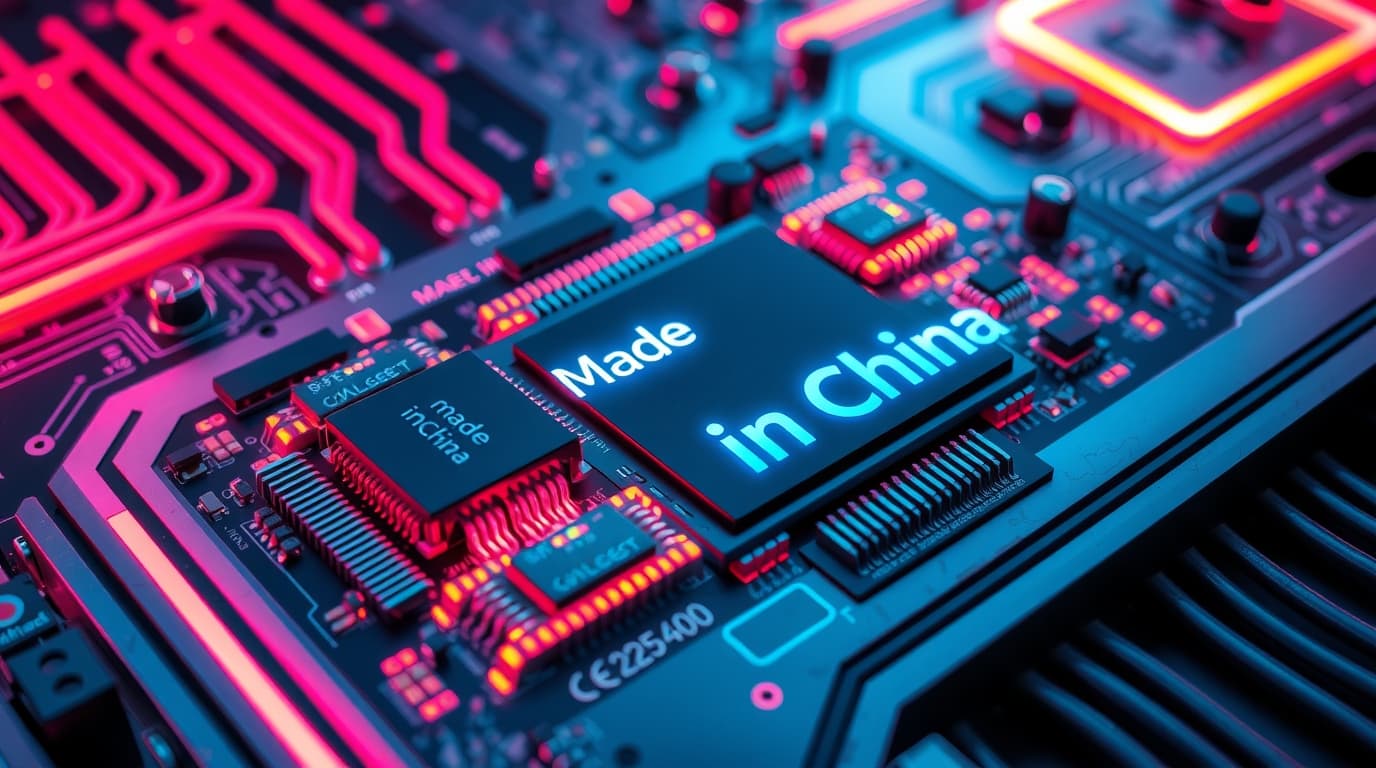
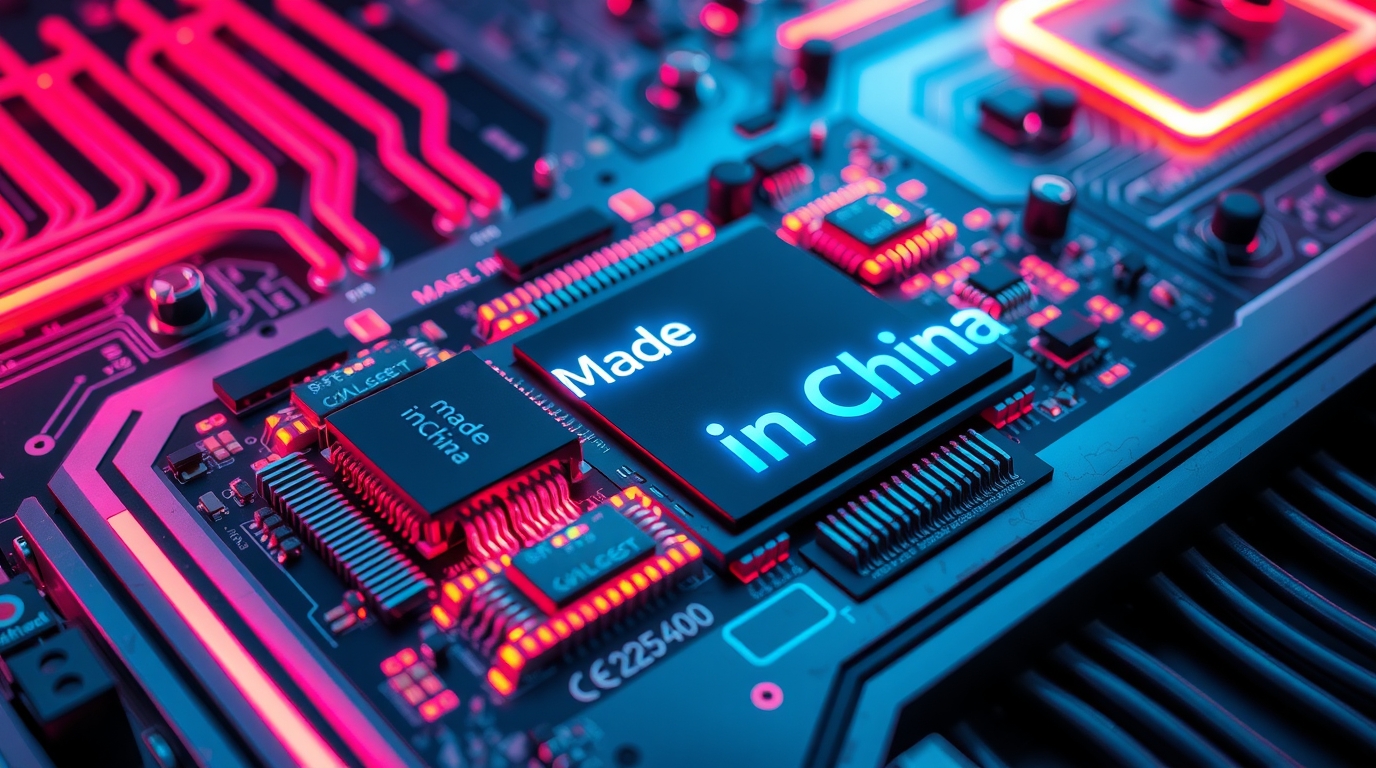
AI chips: banning foreign GPUs from state data centers
On the hardware level something arguably even more important is happening: Beijing is banning the use of foreign AI chips in state-funded data centers. This directly hits U.S. manufacturers:
- Nvidia,
- AMD,
- Intel,
whose GPUs have so far been the default choice for AI training and inference.
China’s goals are clear:
- reduce dependence on U.S. technologies,
- speed up the development of domestic AI accelerators,
- and protect critical infrastructure from being “switched off” via sanctions or tighter export controls.
In parallel, China is:
- tightening export controls on rare-earth elements and magnets,
- signalling that it can push back against the West precisely in the area of raw materials and components vital for chips and electric motors.
The result is an increasingly sharp tech–geopolitics split: while the U.S. tries to limit China’s access to the most advanced chips, China is trying to show it can build its own – and at the same time put pressure on the West via control of key materials.
U.S. nervousness: “They might already be ahead”
On the U.S. political scene, concern is rising that China is not just catching up but may already be ahead in certain AI segments:
- some members of Congress openly argue that China is in front when it comes to specific AI chips and applications,
- security services warn about the risk of Chinese AI and chips being used in military and cyber operations,
- at the same time, U.S. companies (Nvidia, Big Tech) have a strong interest in continuing to do business in China, even under a restricted regime.
The picture is contradictory:
- on the one hand, the U.S. is trying to slow down China’s progress with export controls and restrictions;
- on the other hand, global markets and investors are pouring more and more AI money into China, a country with huge numbers of users, cheaper manufacturing and strong state backing.
Conclusion: a parallel AI world you shouldn’t underestimate
When Americans ask “how far has China really come in AI?”, the honest 2025 answer is:
- in terms of raw model power and innovation – China is no longer a laggard. It is building a parallel AI world with its own giants, open-source models and super-app ecosystem;
- in terms of free speech and open data – China is still constrained by regulatory and ideological limits that turn off many global users and developers;
- in terms of chips and infrastructure – Beijing is aggressively pushing for self-sufficiency, while the West is increasingly worried that Chinese AI and hardware could become global competitors rather than just customers.
For InfoHelm Tech readers the takeaway is simple: the AI race is no longer just an “OpenAI vs Google vs xAI” story. There is an entire Chinese block in play, with its own rules, constraints and ambitions.
The sooner we understand how that parallel ecosystem works – who the main players are, which models actually stand out and how Chinese regulation shapes them – the better we can see where global AI is really heading and what kind of world we may be living in 5–10 years from now.
Disclaimer: This article is for informational purposes only and does not constitute investment, geopolitical or any other form of professional advice.