AI mega-week: how Gemini 3, Claude Opus 4.5 and the Apple-Google deal are reshaping the AI landscape
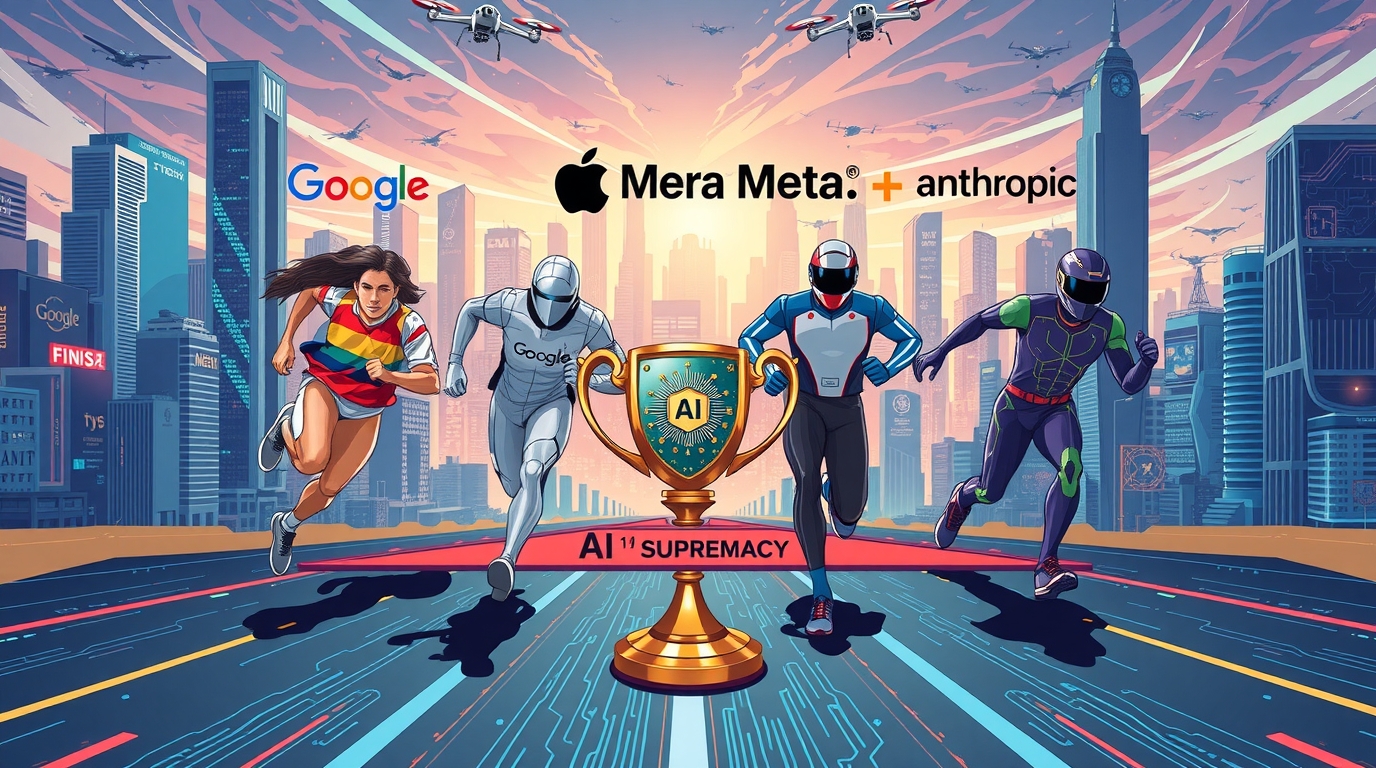
If it feels like the world of artificial intelligence has exploded with news lately, you are not imagining things. In a very short period of time we have seen several moves that literally shift the tectonic plates of the industry:
- Google introduced Gemini 3, a new flagship model focused on reasoning and multimodality
- Anthropic released Claude Opus 4.5, a model aimed at code, agents and serious work on the computer
- Apple decided to rely on Google’s Gemini to power a new generation of Siri
- Meta is considering buying large quantities of Google AI chips, which directly challenges Nvidia’s dominance
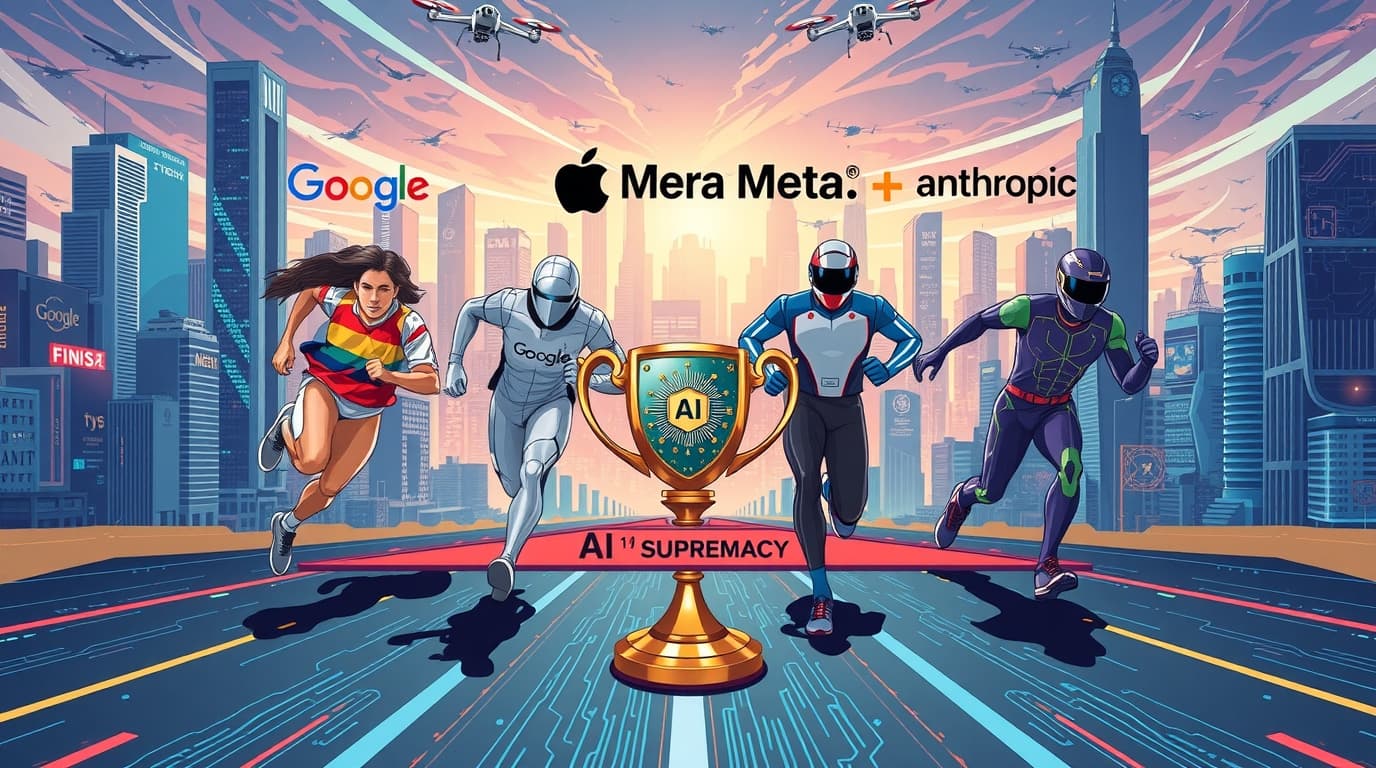
In other words, the AI race is no longer just about who has the “strongest model”. It is also about who controls the infrastructure, who signs the best deals and who can avoid dependency on a single hardware provider.
Gemini 3 – Google finally goes all-in
Google has presented Gemini 3, its most advanced model so far. The focus is on:
- deeper logical reasoning and more complex tasks
- support for multiple input types (text, images, audio, video)
- flexible modes of operation, from fast answers to a more detailed “deep think” style of reasoning
Gemini 3 is gradually being rolled out into:
- the Gemini app as an everyday AI chat experience for users
- environments such as AI Studio and cloud platforms for developers
- Google Search itself, where AI increasingly takes over summarization and direct answers
For developers this means more choice, but also more decisions: which model to pick, in which mode and at what cost.
Claude Opus 4.5 – Anthropic aims to be the king of code and agents
To make sure Google is not the only one in the spotlight, Anthropic has launched Claude Opus 4.5. This model is positioned as one of the best options for:
- complex programming tasks and work with large code bases
- scenarios in which AI acts as an agent: it takes steps, checks results and learns from its own work
- more efficient work with fewer tokens needed for the same job
While Google is trying to offer the broadest general-purpose model, Anthropic wants Claude to become the most useful “AI colleague” for people who write code and handle serious tasks on their computers.
Apple and Google: Siri gets a Gemini brain
Another big move comes from Apple. Instead of building everything from scratch, Apple has decided to base the new generation of Siri on the Google Gemini model.
In practice this means:
- a much faster path towards an assistant that really understands context and can plan tasks
- significantly better long-term memory and more stable behaviour in conversations
- a combination of Apple’s privacy philosophy with Google’s experience in building large foundation models
For iPhone users this looks like a long-awaited “respawn” of Siri: from a helper for alarms and weather to a real AI assistant that can help with everyday work.
For the industry it is a clear signal that we are entering a phase where even the biggest companies need to collaborate. Building a top-tier model entirely in-house requires enormous time and money, and the market is not willing to wait forever.
Meta looks at Google AI chips
The hardware side of the story is also heating up. Meta is considering purchasing large quantities of Google TPU chips (Tensor Processing Units) for its future AI projects.
If such a deal goes through, the consequences could be significant:
- part of Meta’s AI infrastructure would move from Nvidia GPUs to Google chips
- Google would strengthen its position as a provider of both AI software and AI hardware
- Nvidia’s dominance would still be strong, but it would be obvious that major players are actively looking for alternatives in terms of both price and availability
In practice, artificial intelligence is becoming a whole ecosystem: models, specialized chips, the software layer above them and the tools that enable agent-style behaviour.
What this means for everyday users and developers
For everyday users:
- AI will increasingly appear directly inside the services you already use – search, email, documents, phones and operating systems
- you will not have to know which exact model is running behind the scenes, but you will notice smarter and more contextual answers
- artificial intelligence is slowly stopping being a separate “tool” and is turning into an infrastructure layer, like electricity or the internet
For developers, startups and companies:
- competition between Gemini 3, Claude Opus 4.5 and other models brings better capabilities but also more difficult choices
- the risk of getting locked into a single provider becomes an important topic
- it is no longer enough to think about which model to use – you also have to think about which infrastructure it will run on in the long term
Conclusion
This AI “mega-week” shows that we are entering a new phase of the race:
- Google is strengthening both on the model side and on the hardware side
- Anthropic is pushing Claude as a practical AI partner for real work
- Apple is choosing cooperation with a competitor instead of spending years trying to catch up from scratch
- Meta is looking for ways to reduce its dependence on a single chip supplier
For anyone who follows technology the message is simple: the development of artificial intelligence is not going to slow down.
If you are building apps or larger systems, now is the time to think seriously about:
- which model you are actually using,
- which infrastructure it runs on,
- and how to avoid becoming too dependent on just one big provider.
InfoHelm will continue to translate these multi-billion-dollar moves of the tech giants into language that regular users can understand, with enough detail to see what is really happening behind the scenes.