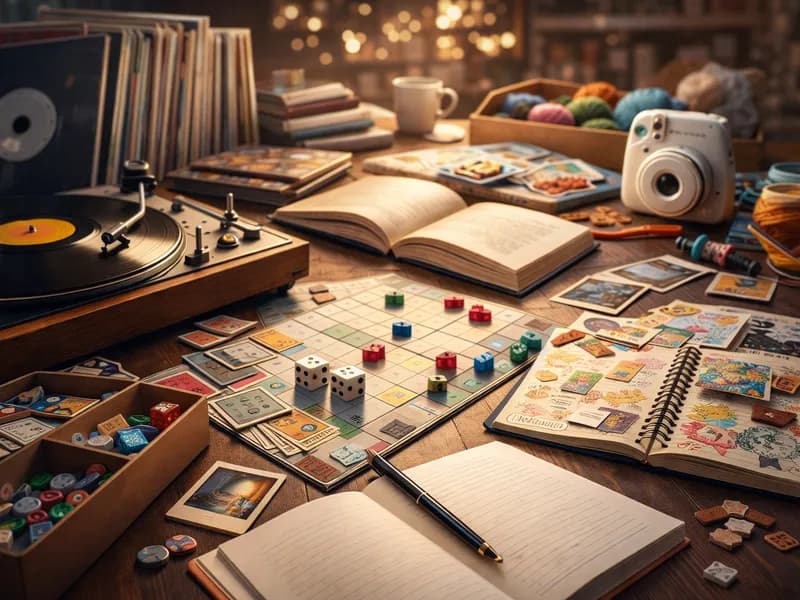
Why analog entertainment is making a comeback in 2026
After years in which almost everything became digital, more and more people are once again looking for entertainment that does not come through a screen. Vinyl records, board games, puzzles, journaling, crochet, scrapbooking, printed magazines, and even a simple evening without notifications all feel appealing again in a way that many people would not have expected just a few years ago.
At first glance, this can look like a passing trend or nostalgia packaged nicely for social media. But there is something deeper behind it. People are tired of constant connectivity, endless scrolling, and the feeling that every form of entertainment has turned into another feed, another subscription, and another algorithm trying to hold attention for as long as possible.
That is why the return of analog entertainment is not only an aesthetic choice. It is increasingly a cultural reaction to digital excess.
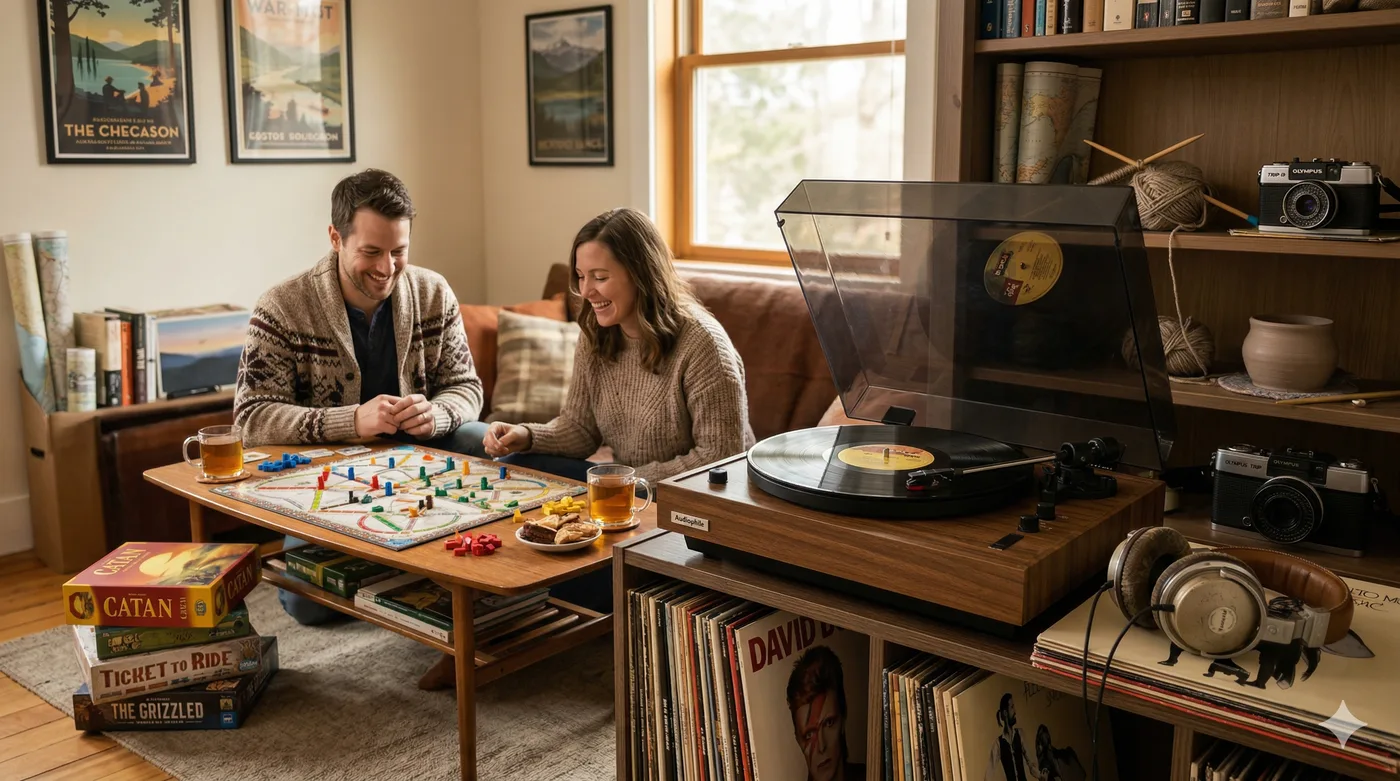
Visual illustration: InfoHelm
Digital fatigue is no longer a side effect
For years, digital entertainment seemed like the peak of convenience. Everything was instantly available: films, music, games, short-form video, social media, and endless feed content. But that same limitless availability has started to change the way people experience leisure.
When everything is always available, entertainment stops feeling special. Instead of relaxation, it often creates fatigue. Instead of enjoyment, it brings a mix of habit, scattered attention, and the sense of always being switched on without really being present.
This is exactly where analog entertainment gains new value. It asks for a slower rhythm, more intention, and less multitasking. And maybe that is exactly why it feels attractive again.
Offline no longer feels like giving something up
There was a time when being away from screens could easily be seen as a step backward. Today, more and more people experience offline time as a kind of luxury. Not because they are against technology, but because they feel that constant digital stimulation drains attention and affects the quality of their free time.
That is why the return to physical media and hobbies is no longer only about retro taste. It is a way of bringing part of life back under personal control. A vinyl record asks you to choose an album and play it on purpose. A board game asks for company and presence. Journaling asks for silence. A puzzle asks for patience. All of those things sound simple, but that very simplicity is what now makes them appealing.
At a time when almost everything is optimized for speed, slowness begins to feel like an advantage.
Analog entertainment brings back the feeling of ritual
One of the biggest differences between digital and analog leisure is ritual.
When you play a playlist in the background, it can be pleasant, but it often remains incidental. When you place a record on a turntable, open the sleeve, lower the needle, and listen to the whole album, the experience gains weight. The same is true of a printed book, a handwritten journal, instant photography, or a board game night with friends.
Analog entertainment brings back a sense of beginning, duration, and ending. It is not designed to be endless. And that is exactly what many people find comforting today. In a world with no end to the feed, a limited format starts to feel freeing.
This is not only about nostalgia
It is easy to reduce all of this to retro aesthetics and idealized memories of the past. But the analog return matters for more than the beauty of old things. It matters because it offers a different relationship to time, attention, and satisfaction.
Many younger people are discovering vinyl, disposable cameras, board games, and handmade hobbies not because they grew up with them, but because those formats feel fresher than digital routine. In other words, analog is no longer only a memory for older generations. It has also become a new kind of choice for people who grew up fully online.
That may be one of the most interesting parts of the whole trend. The return to analog does not come only from nostalgia, but also from saturation with what has become too easy, too constant, and too noisy.
Entertainment becomes something tangible again
There is another important layer here. Analog entertainment leaves a physical trace. A book stays on the shelf. A record stays in the collection. A journal remains written by hand. A board game evening remains an event, instead of just another hour of scrolling that barely feels memorable the next day.
Digital entertainment is convenient, but it often does not leave the same feeling of experience behind. Too much of it passes quickly, superficially, and without a clear boundary between what we chose and what was merely served to us. Analog formats bring back a sense of concreteness. You hold something, choose it, keep it, and return to it.
That is exactly why physical media and offline hobbies feel more valuable again. Not because they are objectively better, but because they offer something digital formats often cannot: presence and tangibility.
Analog and digital will not replace each other
It is also important to say this clearly: the return of analog entertainment does not mean the end of digital entertainment. People are not going to abandon streaming, mobile apps, or online content. But there are more and more signs that many are trying to find some balance.
That may be the most realistic conclusion. The future is probably not completely analog, just as it is not completely digital. It is much more likely that people will choose digital for convenience and analog for the quality of the experience.
In other words, the screen remains important, but it is no longer the only center of entertainment.
Conclusion
Analog entertainment is making a comeback in 2026 not because the world has suddenly forgotten technology, but because digital oversaturation has finally become visible in everyday life. People are looking for ways to step back from feeds, slow down, and experience entertainment as something tangible, intentional, and real again.
That is why vinyl records, board games, journaling, puzzles, and similar offline rituals no longer feel like hobbies from the margins. They are becoming a response to a culture in which attention is constantly fragmented and free time often feels more like an extension of the internet than real rest.
Maybe that is exactly why analog entertainment feels attractive again. Not because it is new, but because in a world of constant connection it starts to feel refreshingly human.
Note: This article is educational and informational.